















Hologram display glossary: the terms buyers meet.
Most products sold as "hologram displays" are not true holograms.
Most products sold as "hologram displays" are not true holograms. They are transparent or reflective screens that make a person or product seem to stand in the room. This glossary defines 33 terms you will meet in quotes and tenders, from Pepper's ghost and hologram fans to nits, infrared touch and flight cases. General definitions follow public reference sources; HoloBox911 figures come from our own specifications.
How to use this glossary
Terms are grouped by topic, not A to Z. Where a term has a HoloBox911 figure, we give it after the general definition, so you can compare like with like. For the bigger picture, read what a hologram is and our buyer's guide.
Types of "hologram" display
- Hologram (true hologram): a recording of a light interference pattern that can reproduce a 3D light field by diffraction. Optical holograms are recorded with laser light, which is why most commercial "hologram" products are something else.
- Holography: the science and technique of making true holograms.
- Holographic display: a broad marketing term for any display that makes an image seem to float or stand in space. It usually means a transparent, reflective or spinning display, not a true hologram.
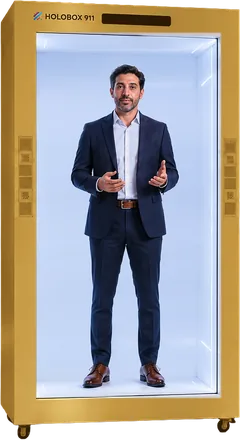
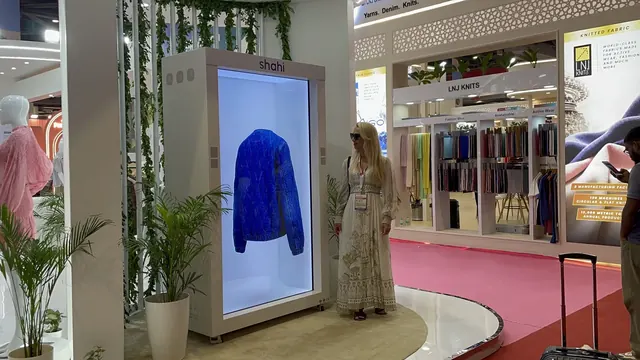
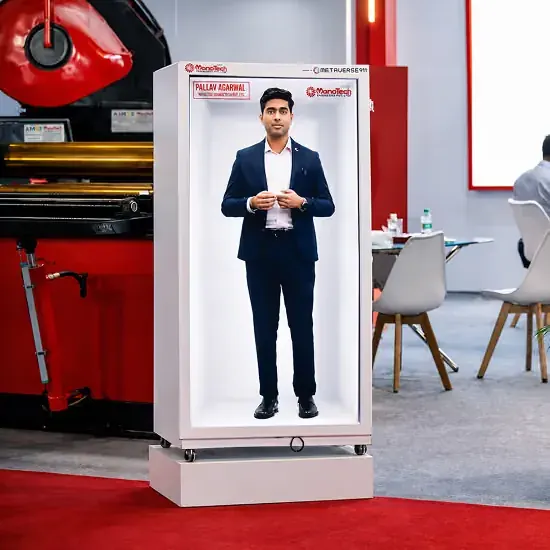
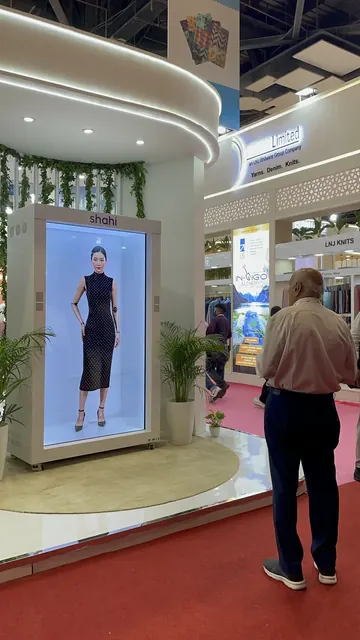
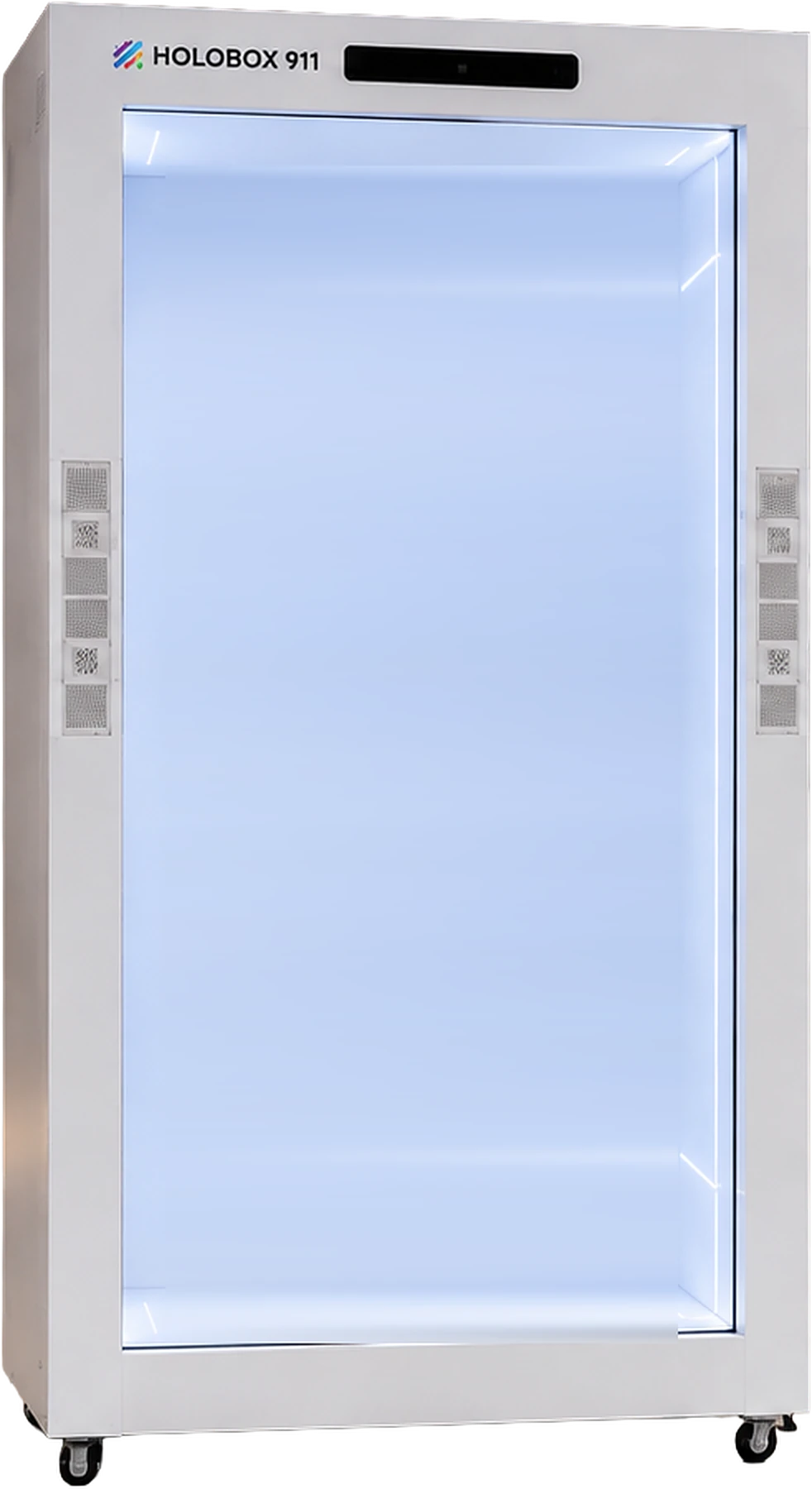
- Life-size hologram display: a display large enough to show an adult at full height. The 7-foot HoloBox911 is 213 cm tall with an 86-inch panel, so a person appears at their own height.
- Transparent display: a screen you can see through when parts of it are unlit or clear. It is the core part of many modern hologram displays.
- Transparent LCD: a see-through liquid crystal screen. Dark areas block the view, so it often sits in a lit case.
- Transparent OLED: a see-through screen whose pixels make their own light. Unlit areas stay clear, and it suits indoor viewing up close.
- Transparent LED: rows of LEDs on glass or strips with gaps between them. It is bright enough for shop windows and facades, and best seen from a distance.
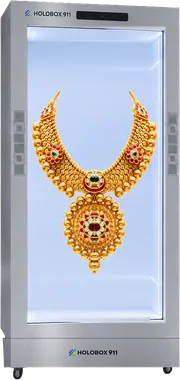
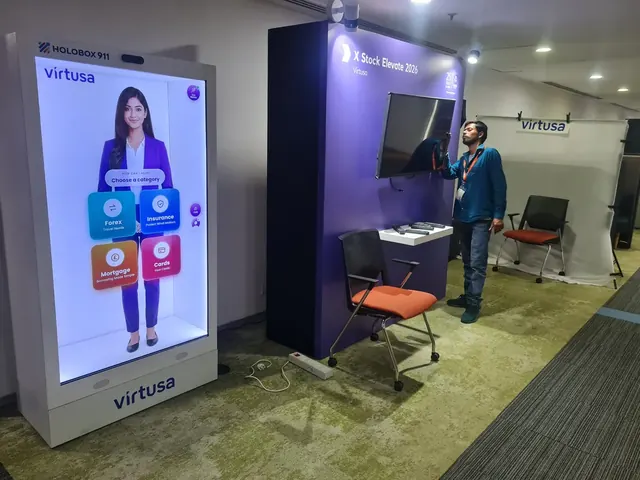
- Hologram box (hologram cabinet): a transparent panel set inside an enclosed, lit cabinet. The cabinet gives the subject a clean background, so it reads as standing inside the box. HoloBox911 is built this way.
- Pepper's ghost: a stage illusion that uses an angled pane of glass to reflect a hidden, brightly lit figure, so it seems to float in front of the audience. It was popularised by John Henry Pepper in London in 1862, and many stage "holograms" still use it.
- Hologram fan: a spinning blade of LEDs that draws an image as it turns, relying on persistence of vision. It suits small eye-catchers; see fan or life-size display.
- Hologram projector: a projector that throws an image onto gauze, glass or a screen so it seems to float. Results depend heavily on a dark room; see projector or display.
- Volumetric display: a device that forms a 3D image in physical space, rather than a flat image that only suggests depth. Most are lab or niche products today.
- Glasses-free (autostereoscopic): viewable in 3D without special glasses or a headset. A HoloBox911 needs no glasses, headset or dark room.
Picture terms
- 4K (4K UHD): a picture of 3840 x 2160 pixels, the standard Ultra HD television resolution. Both HoloBox911 sizes use 4K transparent panels.
- Nits: a unit of brightness, equal to one candela per square metre. The 7-foot HoloBox911 panel is rated at 400 nits; the 6-foot at 400 to 500 nits.
- Contrast ratio: the gap between the brightest white and the darkest black a panel shows. Both HoloBox911 sizes are rated at 1200:1.
- Viewing angle: how far to the side you can stand before the picture fades or shifts. The 6-foot panel is rated at 178° horizontally and vertically.
- Viewing distance: where viewers should stand for the best picture. A 7-foot HoloBox911 looks best from about 1.8 metres (6 feet) or more.
- Portrait and landscape: upright or sideways screen orientation. Portrait suits a person; landscape suits wide products, as with Fluidra's pool and plant room.
Touch and interaction
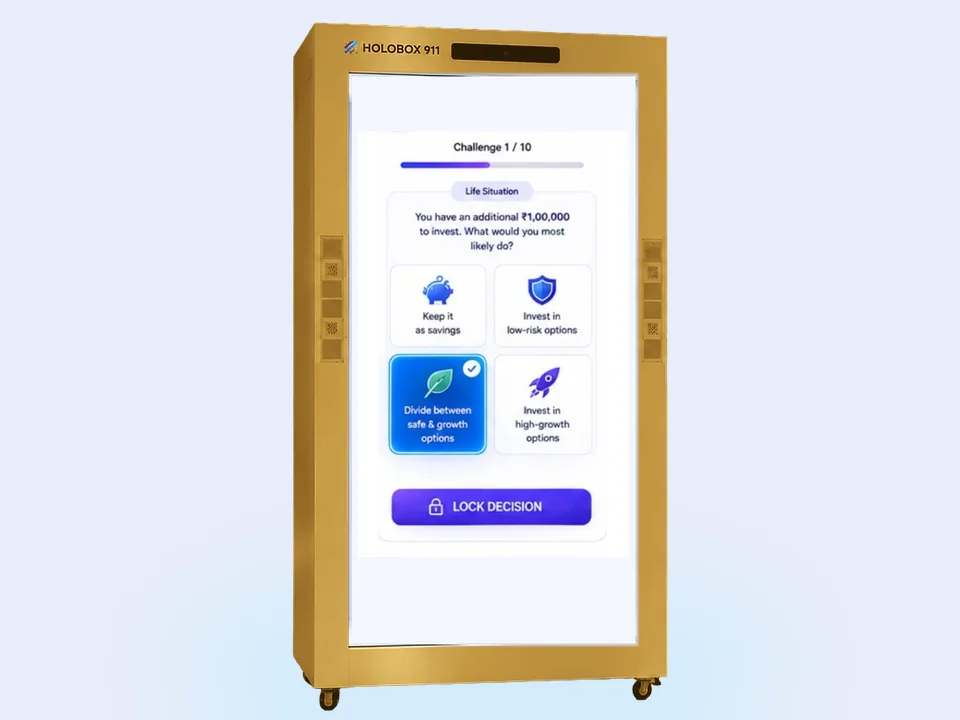
- Infrared touch: a grid of infrared beams across the screen; a finger breaks the beams and the system locates the touch. It works with gloves and leaves the glass unpatterned. The 7-foot HoloBox911 has 10-point infrared touch across the full panel.
- Multi-touch (10-point touch): the screen tracks several fingers at once, so two or more visitors can tap together.
- PCAP (projected capacitive) touch: the type used in most phones, which senses a finger through the glass. The 6-foot HoloBox911 offers 10-point infrared or PCAP.
- Gesture control: the display responds to hand or body movement without touch. HoloBox911 runs gesture-based games.
People, AI and live links
- AI avatar: a digital person driven by AI that listens and answers out loud. HoloBox911 avatars answer from your approved documents first; see AI avatar.
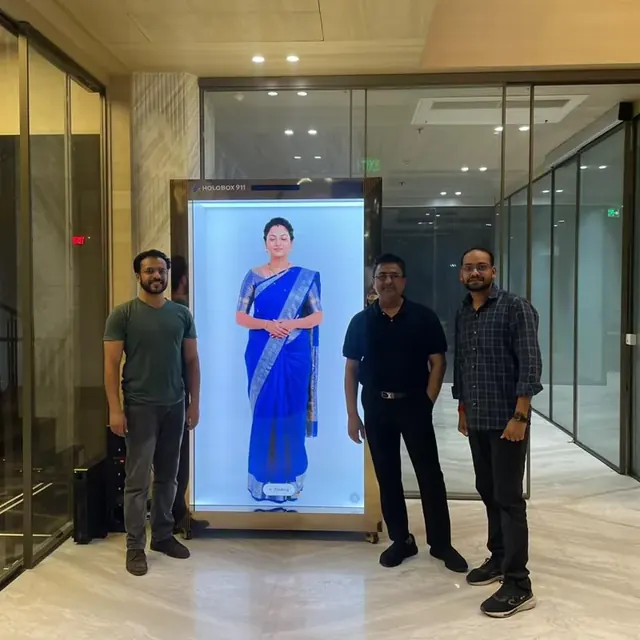
- AI receptionist: an AI avatar that greets visitors and can alert a host, like Maya at Race Eco Chain.
- On-premise AI: AI that runs on hardware at your site, with no internet needed. At Maruti Suzuki's vendor conference, nothing left the building.
- Telepresence: technology that lets a remote person appear and interact as if present. With a hologram display, they appear at full height; see live telepresence.
- Holoportation: a research term for capturing people as 3D models and sending them in real time to a remote viewer. In marketing, it often just means live hologram telepresence.
- Latency (delay): the time between the speaker acting and the audience seeing it. HoloBox911 telepresence delay is about 0.4 seconds or less.
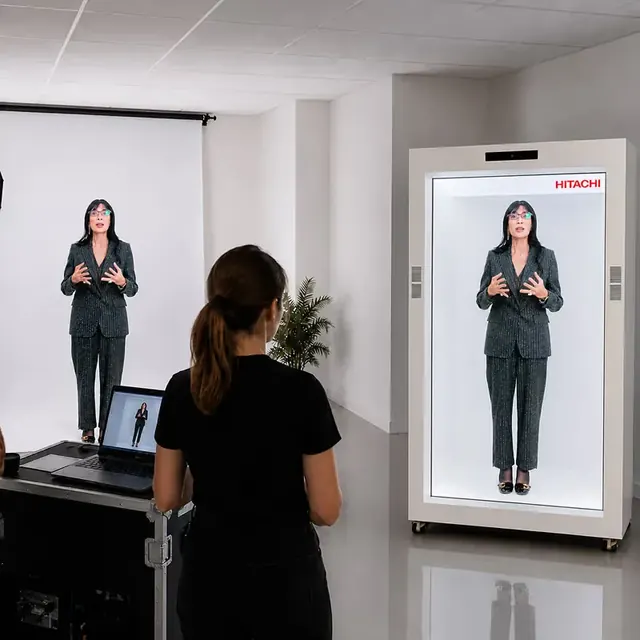
- Green screen (chroma key): a plain backdrop that software removes, so the speaker stands clear with nothing behind them. Hitachi's Tokyo speaker was filmed this way.
Logistics and buying
- Flight case: a hard, reusable transport case. The 7-foot HoloBox911 ships in an aluminium flight case with a built-in ramp, 300 kg packed.
- CE marking: a manufacturer's declaration that a product meets EU safety, health and environmental rules. The HoloBox911 product is CE certified.
Questions, answered.
Is a hologram display a real hologram?
Usually not. A true hologram records a light interference pattern, normally with lasers. Most "hologram displays", HoloBox911 included, use a transparent 4K panel in a lit cabinet, so a person or product seems to stand inside it. The effect is life-size and glasses-free, but it is a display, not laser holography. Read what a hologram is for more.
What is the difference between Pepper's ghost and a transparent display?
Pepper's ghost reflects a hidden, lit image off angled glass, a stage trick popularised in 1862. A transparent display shows the image on the see-through panel itself. HoloBox911 uses an 86-inch transparent 4K panel in a cabinet, so there is no angled glass to align and no hidden screen. It runs in a normally lit room.
What does nits mean on a hologram display?
Nits measure brightness: one nit equals one candela per square metre. Higher nits help in brighter rooms. The 7-foot HoloBox911 panel is rated at 400 nits with 1200:1 contrast, and is made for indoor use away from direct sun and glass roofs. You don't need a dark room, but avoid sunlit windows.
What is the difference between telepresence and holoportation?
Telepresence puts a remote person in front of an audience over a live link. Holoportation is a research term for capturing someone as a 3D model and sending it in real time. On a HoloBox911, live telepresence shows the speaker at full height with a delay of about 0.4 seconds or less, as when Hitachi's Tokyo executive addressed New Delhi.
What is 10-point infrared touch?
A grid of infrared beams across the screen that tracks up to ten touches at once. A finger, or a gloved finger, breaks the beams and the system finds the spot. The 7-foot HoloBox911 has it across the full 86-inch panel, so visitors tap the glass to pick a topic or explore a 3D model, as at NatWest Group.
Is a hologram fan the same as a hologram display?
No. A hologram fan is a spinning blade of LEDs that draws an image as it turns, using persistence of vision. It suits small eye-catchers. A life-size hologram display like the 7-foot HoloBox911 shows a person at full height on a 213 cm unit, with touch and AI. Compare them in our fan or life-size guide.
Last reviewed 5 November 2026.
Questions about yours? Ask us.
Tell us the room, the date and what it should show. We reply within one working day.