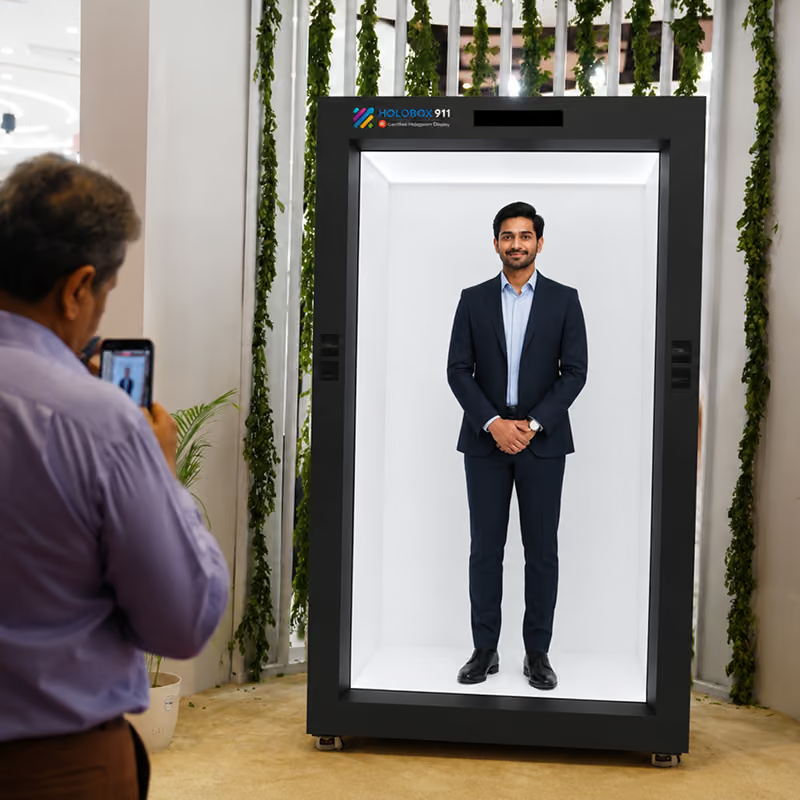
3D Hologram for Events & Exhibitions
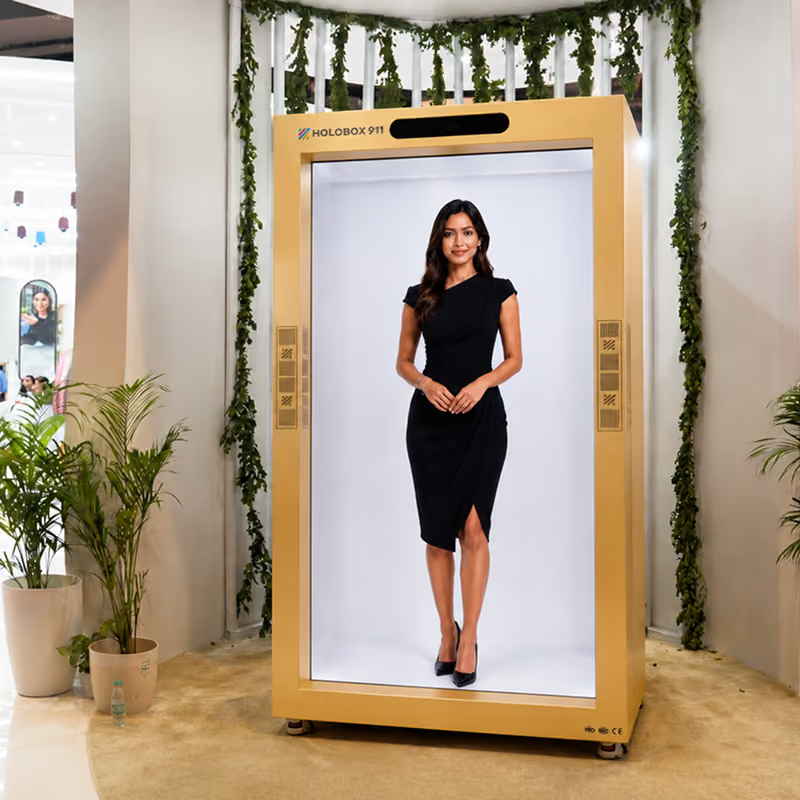
Hologram for Education & Training
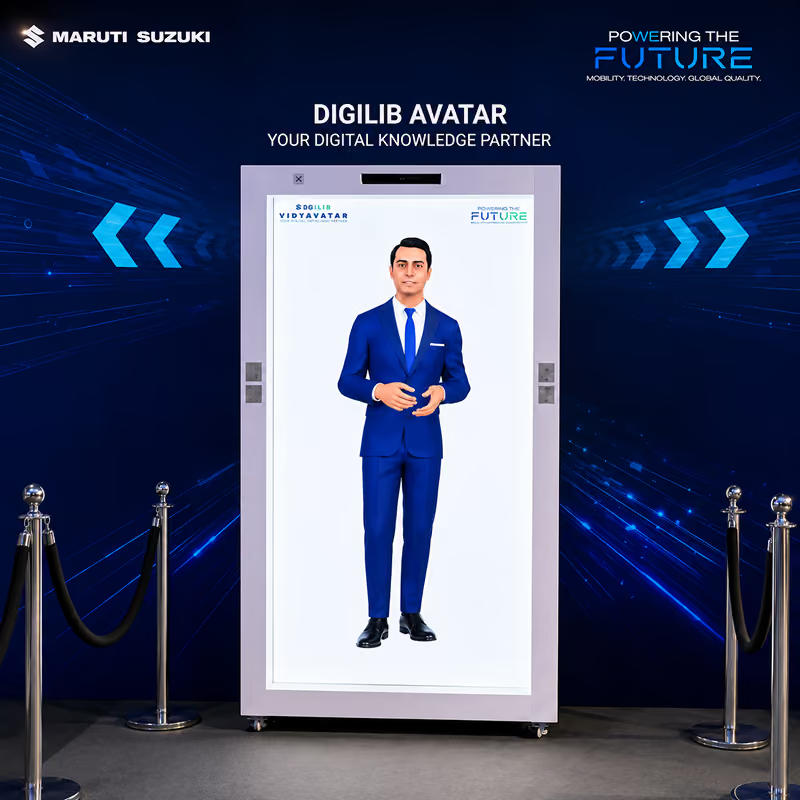
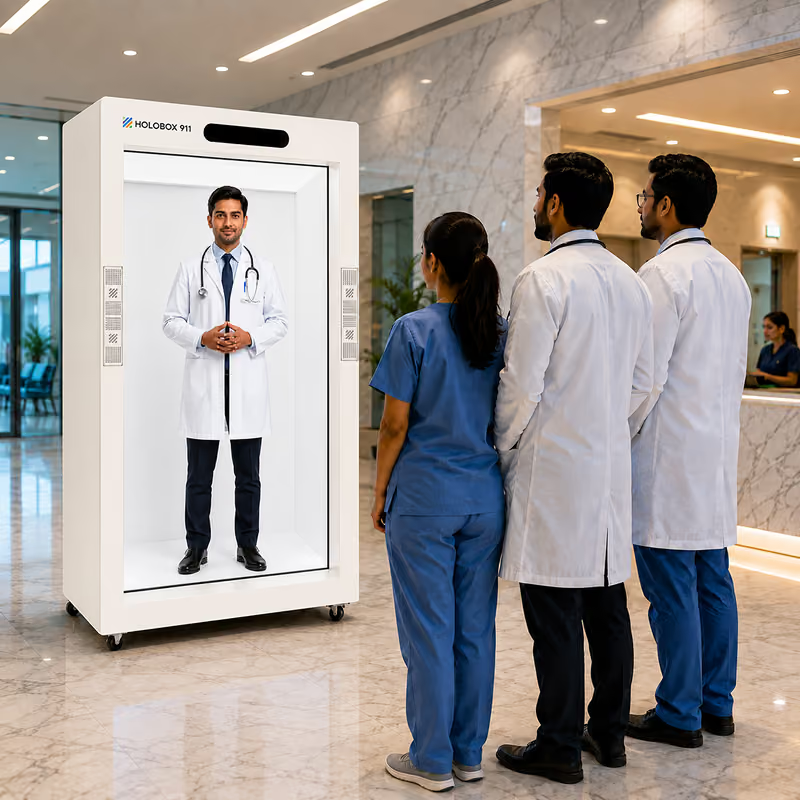




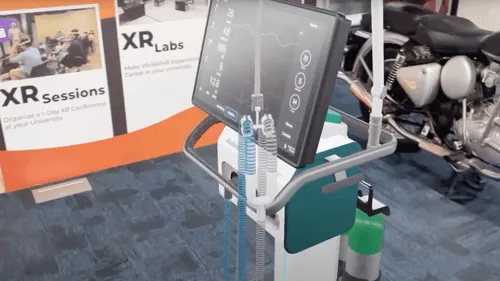
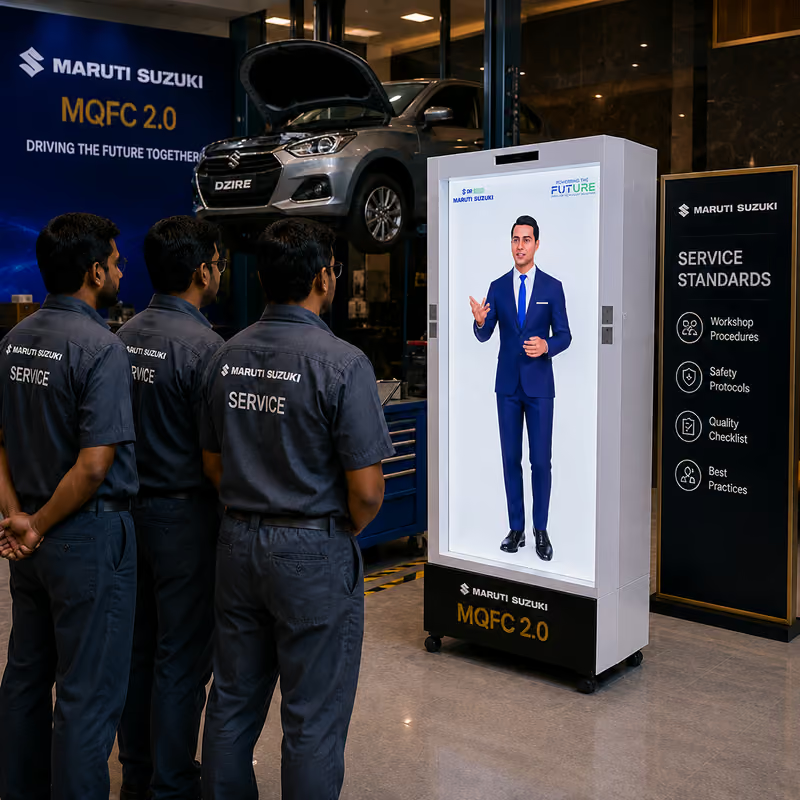
HoloBox911 — the holographic display brand of AXRverse Global Private Limited, maker of the 86-inch true-4K transparent HoloBox911 display, serving enterprise clients across India — supplies the unit, builds the 3D medical content and runs the deployment. The format is already proven with technical audiences: the touch-controlled, exploded-view build that a device cutaway or an organ model needs was used at Maruti Suzuki's MQFC 2025 dealer training, where engineers pulled vehicle internals apart layer by layer on the glass.
2-4 hours on site. That covers unpacking the flight case, positioning, calibration and a full test run before delegates arrive. The longer lead item is not the hardware — it is the content. Converting a molecule, a device mechanism or an anatomy model into a hologram-ready asset takes a few working days once you approve the reference material.
Booth requirements are modest: standard power, a stable internet line if you are running a live AI avatar, and roughly 1 sq metre of floor. Recorded content needs no connection at all. So plan the content approval, not the install day.
There are two commercial routes and they price differently. A conference or launch is charged per event, turnkey. A hospital lobby or medical-college unit is a one-time purchase with an annual warranty. Both are invoiced with GST, and a same-day quotation comes back once you send the brief.
We publish no rate card, because scopes differ too widely for one to be honest. What moves the number: how many days the unit is on site, and which city it travels to. Then the content question — whether you supply a finished video or need a 3D asset built. Content build is usually the larger variable, not the hardware.
It answers directions, OPD timings and general queries in English and Hindi, with regional languages configurable. It does not give medical advice and it holds no patient data. That limit is deliberate: the avatar answers only from material your hospital has approved, and where it does not know, it says so rather than inventing an answer.
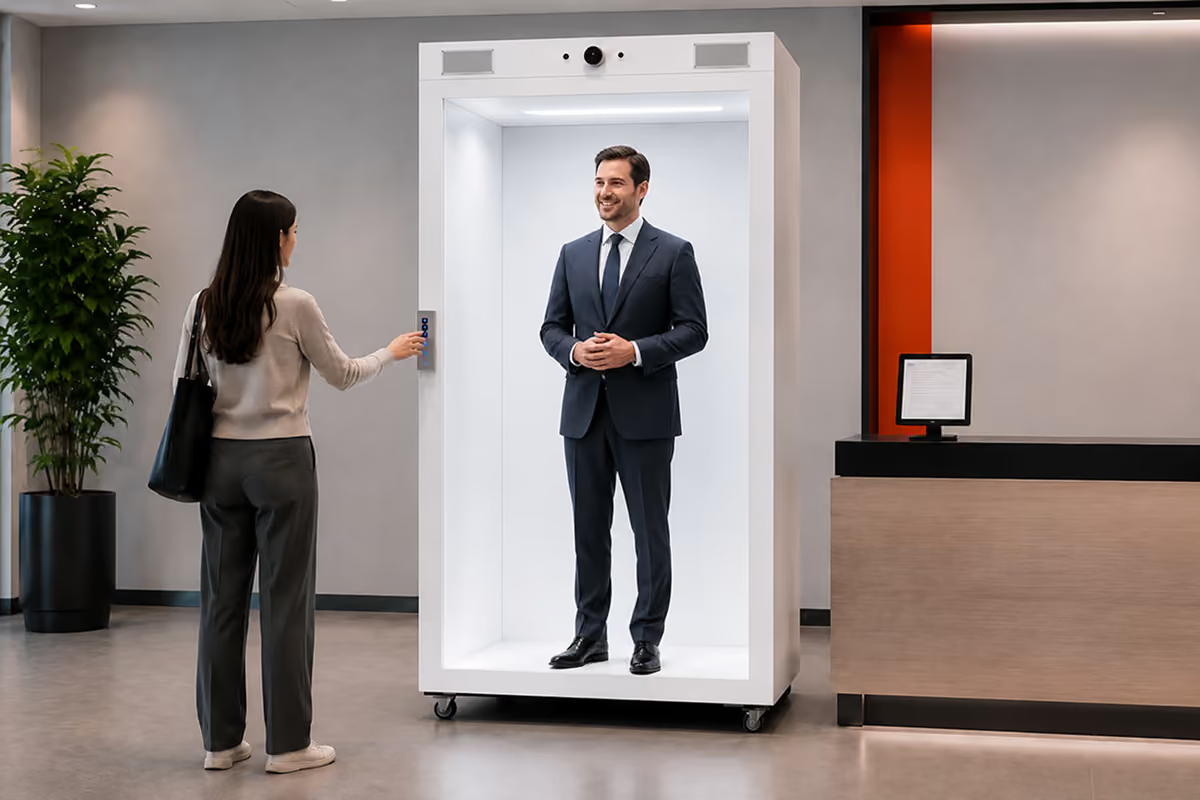
A far-field mic array picks the spoken question out of lobby noise and converts it to text. The avatar replies at life size, lip-synced, with supporting detail on the 22-inch touch overlay beside the unit. The same architecture runs the AI receptionist in Capgemini's main lobby.
HoloBox911 does, at its XR Design Center in Noida, working from your reference material under NDA. That covers molecular structures, device mechanisms and anatomy models. You need no in-house 3D team, and your pipeline does not go to a third party. If you already hold finished assets, the display accepts standard MP4, MOV and AVI video rendered against a pure black background — the black backdrop is what makes the subject appear to float rather than sit on a screen.
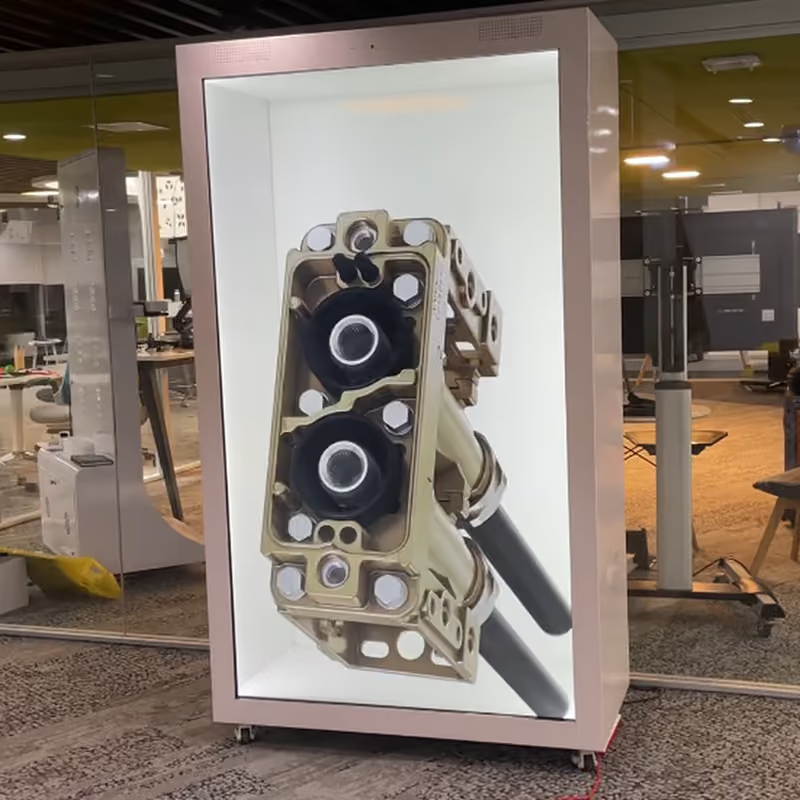
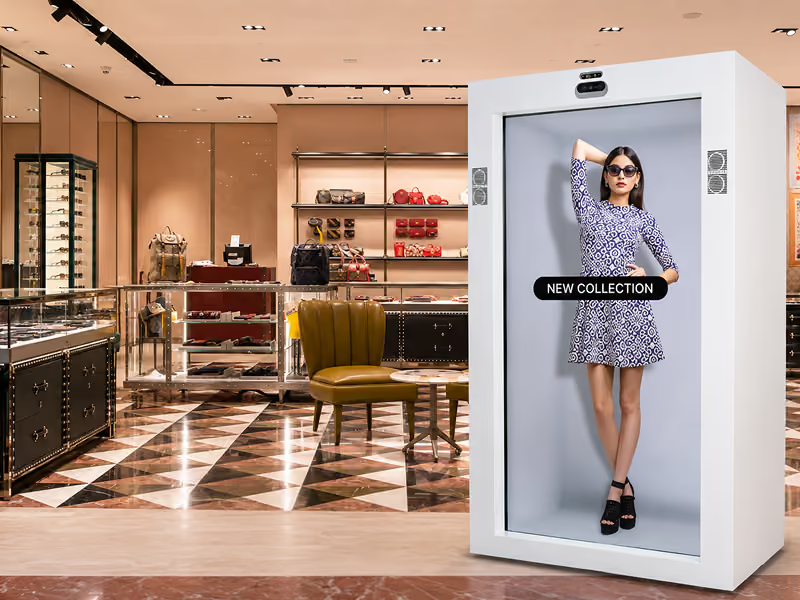
An 86-inch 4K transparent LCD enclosure at roughly human height, so a life-size figure reads as a person rather than a picture.
Floor requirement is roughly 1 sq metre. It needs mains power, and an internet line only where live modes are running.
It arrives flight-cased. Power it on, load content through the app, and it runs — no specialist crew on the day.
No rigging, no lighting rig, no darkened room and nothing fixed to the building. It can be relocated later.
Place it where arriving visitors face it, with clearance on both sides. The transparency is the effect, and it is lost flat against a wall.
ISO 27001-certified processes govern every deployment; the hardware carries ISO 9001, CE and TÜV certification.
On brightness and on cost per square metre, an LED wall wins. On depth and on interaction it does not compete. A flat panel shows a picture of a device. A transparent enclosure makes the device appear to occupy space at life size with nothing behind it — with no headsets, no 3D glasses and no darkened room. Paired with an AI avatar it answers back, as it did for 750+ live queries at a Maruti Suzuki conference.
The practical differences:
| Flat panel signage | LED video wall | Transparent holographic display | |
|---|---|---|---|
| Depth | Flat image | Flat image, larger | Subject appears to occupy space |
| Viewing kit | None | None | None — no headsets, no 3D glasses, no darkened room |
| Answers a spoken question | No | No | Yes — 750+ live queries answered at a Maruti Suzuki conference |
| Connectivity | Optional | Optional | Live modes need a link; recorded content does not |
The honest read: if your job is to fill a wall with bright motion for a passing audience, buy LED. If your job is to make one object or one person feel present to a technical audience who will walk up and question it, the flat formats cannot do that at any size.
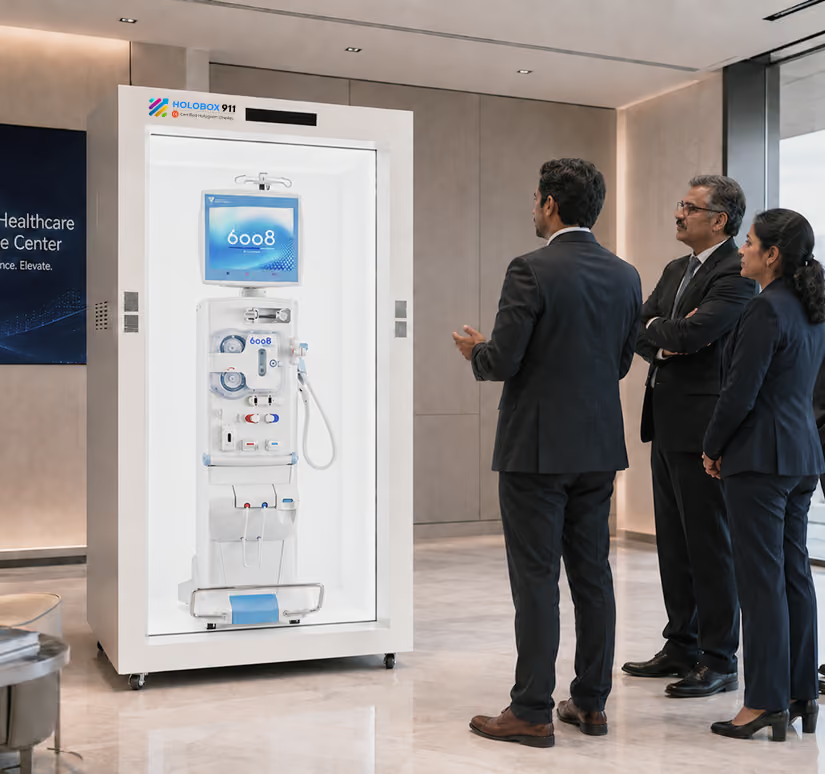
No named hospital or pharma client yet. That is the straight answer. What does exist is evidence from adjacent technical audiences who behave the way clinicians do: they interrupt, they ask how it works, and they want to see inside the thing.
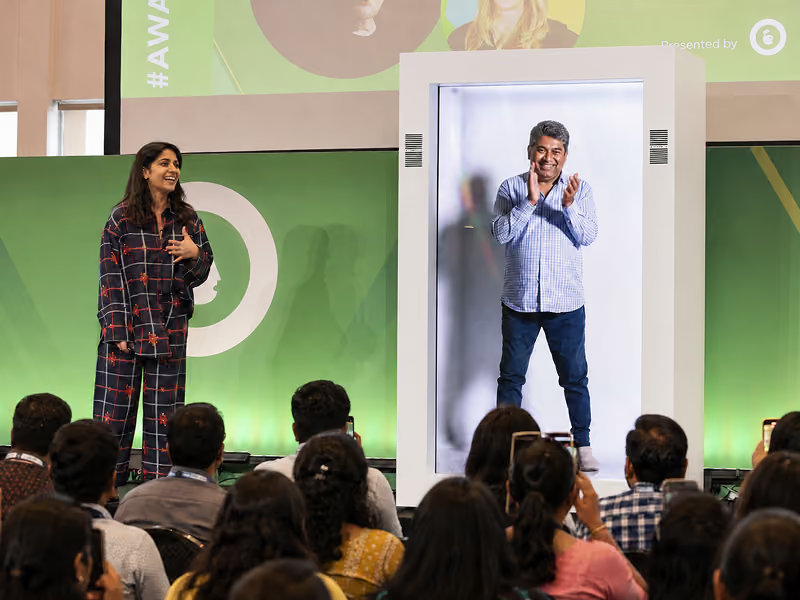
Read case study →At a Maruti Suzuki conference the AI avatar answered 750+ live queries from dealers, unscripted, drawing only on approved material. For Hitachi, Tokyo leadership was projected life-size into a New Delhi convention — what a remote principal investigator or a global medical director needs.
Read case study →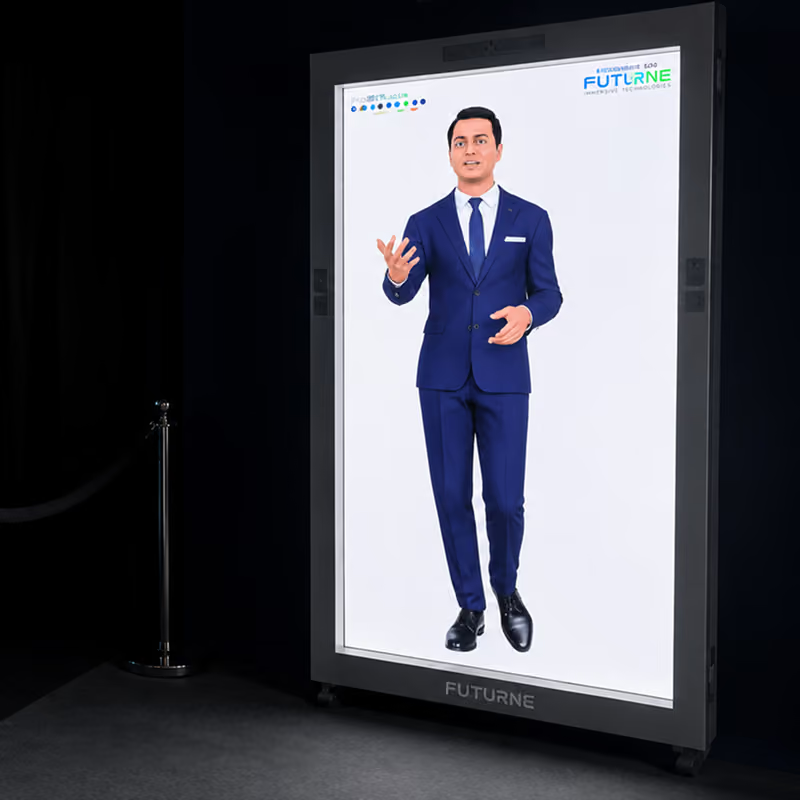
At MQFC 2025 engineers explored vehicle internals as a touch-controlled, exploded-view hologram — the same build a device cutaway or an organ model uses.
Read case study →None of those is a hospital. All of them are technical, live and unscripted. Judge the format on that, and ask for a named healthcare reference before a second unit rather than before a pilot.
A per-event package is turnkey: logistics, medical-content loading, calibration and an on-site operator who stays for the duration, pan-India. You are not renting a cabinet and then finding somebody to run it. Invoicing is with GST.
Ask on WhatsApp — conference rentalA purchase includes staff training and a 1-year SLA-backed onsite warranty, with delivery approximately 2 to 4 weeks from order. Support covers installation, custom content creation, technical assistance and regular maintenance. Because the unit plays approved content, daily operation is loading and scheduling rather than administration.
Ask on WhatsApp — hospital or college installationYes, and in most other major Indian cities. Rental is served across Delhi NCR, Mumbai, Bengaluru and Pune, with pan-India coverage for conferences and launches outside those four. A per-event package is turnkey: logistics to and from the venue, medical-content loading, calibration and an on-site operator who stays for the duration. You are not renting a cabinet and then finding somebody to run it. Invoicing is with GST, and a same-day quotation comes back once you send the city, the dates and what you want on the glass. For venues outside the main metros, send the location early — transport scheduling is the item that moves a delivery date, not availability.
No. The display runs content your hospital has approved and gives general guidance only — directions, OPD timings, department locations, awareness material. It does not access records, does not store visitor identity and does not give medical advice. The avatar answers from a knowledge base built out of material you supply and sign off, not from the open web, and where a question falls outside that material it says so instead of guessing. ISO 27001-certified processes govern every deployment, which covers how content moves between your team and ours. If your compliance team wants that scope in writing before a lobby pilot, ask for it at quotation stage rather than after installation.
Standard MP4, MOV and AVI, rendered against a pure black background. The black backdrop is not a stylistic preference — it is what makes the subject appear to float inside the enclosure with nothing behind it. Anything rendered on a white or coloured backdrop reads as a video playing on glass rather than an object occupying space. If an agency is producing your asset, brief the black background at the start, because re-rendering afterwards costs more than getting it right first time. The unit arrives flight-cased with its player, so content loads through the app rather than through a separate media server.
Approximately two to four weeks for a standard outright purchase. That window covers manufacture scheduling, flight-casing and transport to your site. Installation and staff training happen on arrival, and the unit carries a 1-year SLA-backed onsite warranty from that point. Build the content timeline in parallel rather than in sequence: a lobby unit that arrives on schedule with nothing approved to play sits dark. If you are working to a fixed opening date, an inauguration or the start of an academic term, say so at quotation stage. The delivery slot is then booked against that date rather than against the order date.
No. No headsets, no 3D glasses and no darkened room — the whole room sees the hologram at once, with the lights on. That is the practical difference between this and most immersive formats in a teaching or clinical setting: a full lecture hall shares one display, and a lobby visitor engages without being handed equipment. Nobody queues for a device, nobody sanitises one between users, and nobody is excluded because they already wear spectacles. Where an audience wants more detail, the 22-inch touch overlay beside the unit carries it, so interaction stays hands-on without becoming per-person hardware.
HoloBox911, the holographic display brand of AXRverse Global Private Limited. The India Experience Center is at Unit IS-700, Tower-IS 7, Ground Floor, UTC Sec-132, Noida, Uttar Pradesh, and the XR Design Center that builds molecule, device and anatomy content sits in the same complex. Proximity matters for a Delhi NCR buyer for two reasons: you can watch a unit running before you commit, and content review happens in person rather than over file transfer. Support covers installation, custom content creation, technical assistance, regular maintenance and staff training. For hospitals and colleges outside NCR the same team travels — Noida is where content is built, not the limit of where it goes.