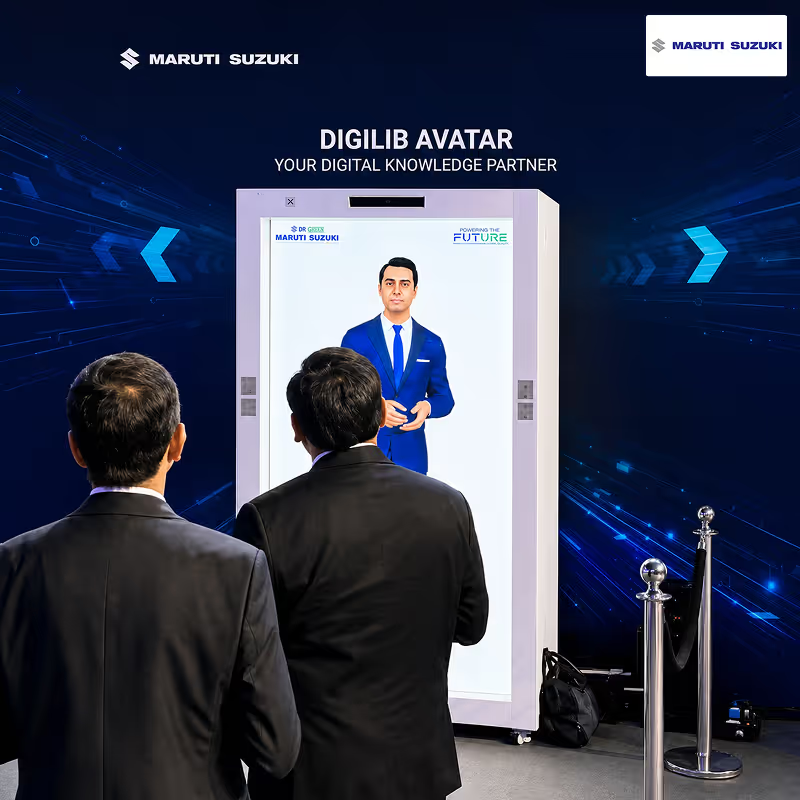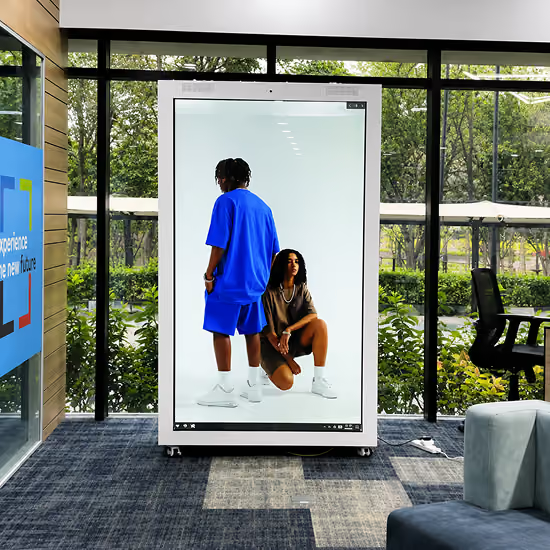




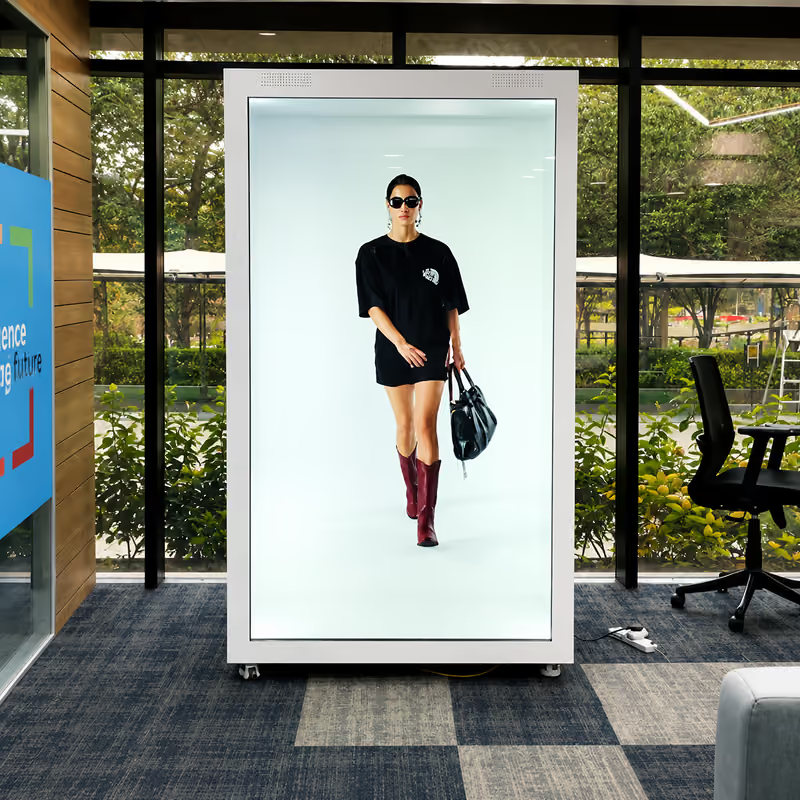


Five steps of holographic telepresence, identical at both Centres. Mumbai and Hyderabad run the same sequence, same night.
The unit carries six jobs across the estate — no reconfiguration between them.

A leader in France stands in Mumbai at full height, taking the room live. HoloBox911 runs capture, stream and post — the use case the deployment was built around.
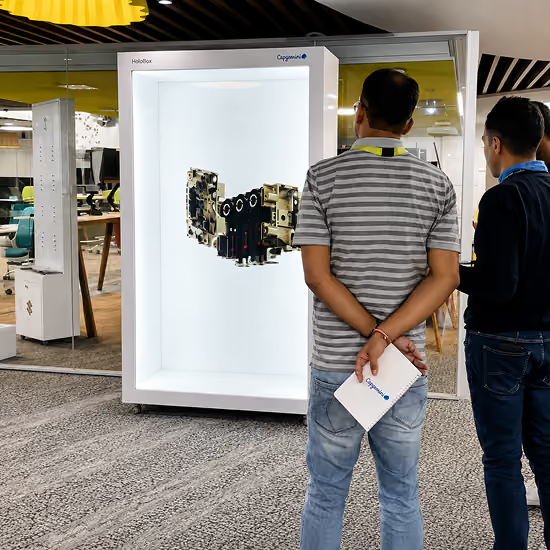
A reference architecture stands in the room as stacked tiers a client can point at, instead of a slide of boxes and arrows nobody remembers by the lift.
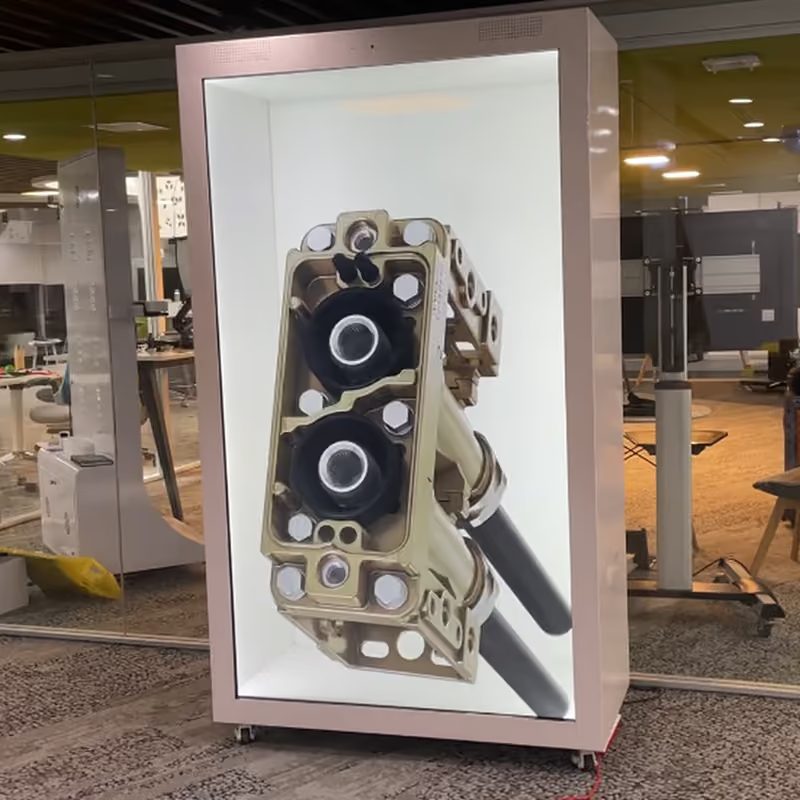
An engineering twin turns at desk height with its readings running beside it — the thing being sold is a model, and here the model has a body.
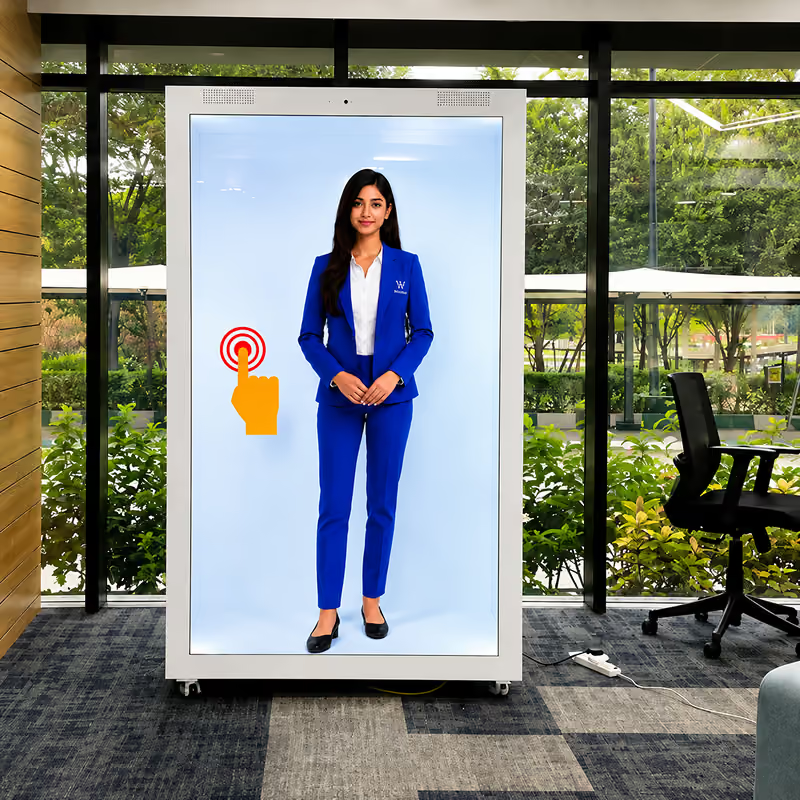
A pursuit team brings the practice lead into the room from wherever the bid found them, at full height, without a flight in the schedule.
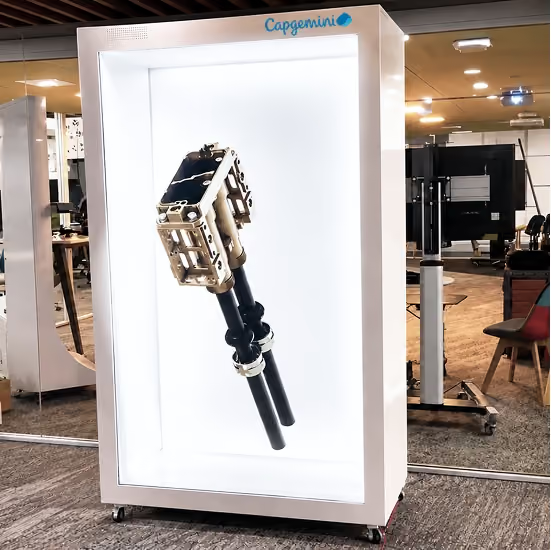
The same unit that hosts a client at 11am briefs an intake at 3pm. One purchase, two audiences, nothing swapped over in between.
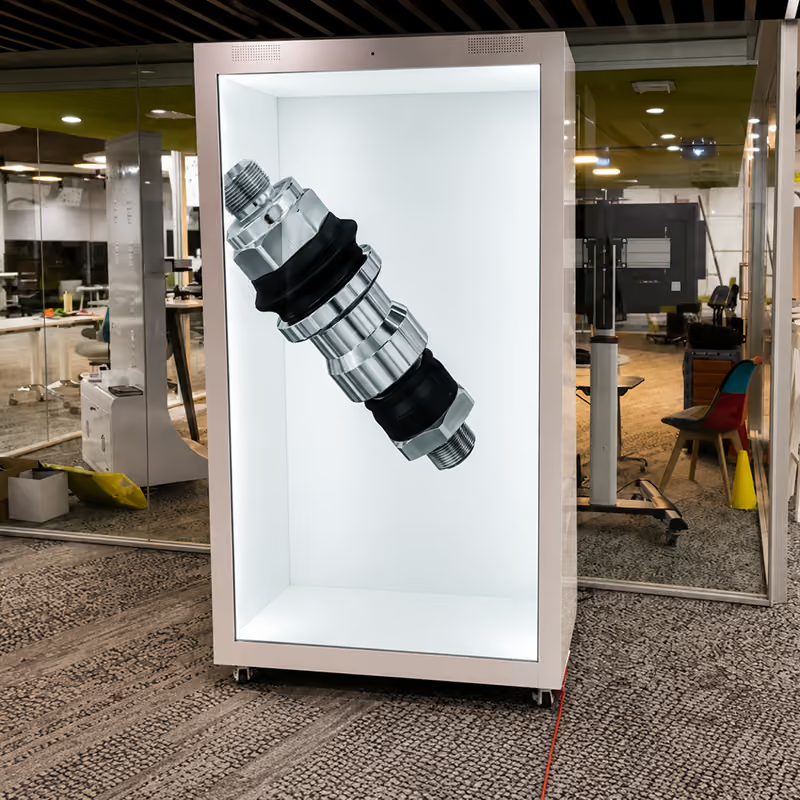
A Centre of Excellence has to try things. Formats get trialled on a unit already paid for, in front of the people whose opinion decides whether they go further.
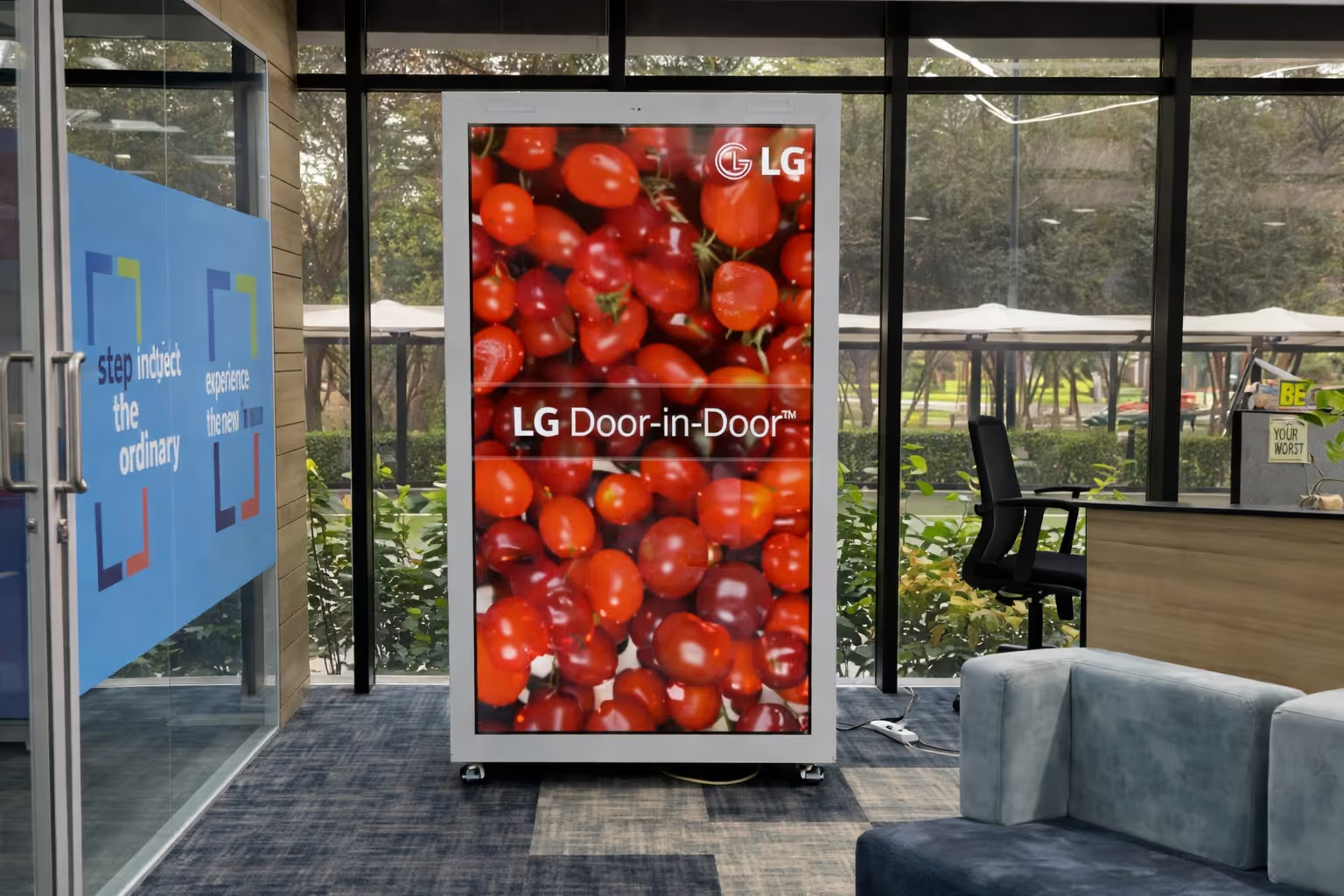
A screen asks to be looked at. An object does not have to ask. A hologram display puts something person-sized where the floor is, and a room reorganises itself around it without being told to.
The HoloBox is an 86-inch 4K transparent LCD enclosure that renders a photorealistic figure at human height. Nothing is worn to see it, the hall lights stay up, and everyone present sees the same figure at once — no headsets, no 3D glasses.
For Capgemini the point is presence, not the panel. A leader in France stands in Mumbai and Hyderabad as holographic telepresence — the same live effect people also call holoportation or a hologram video call.

Discover how HoloBox911 enabled Capgemini to bridge geographical distances, visualize complex consulting services, and deliver a consistent Experience Centre across multiple locations through immersive holographic technology.

An Experience Centre earns its budget on the days a client is in it. The leaders whose presence carries those rooms sit in France. Their diaries, not the calendar, were the binding constraint.

Consulting and engineering work cannot be put on a plinth. A visitor is asked to buy something they cannot see, in a room built specifically to show them things.

Mumbai and Hyderabad are sold as the same capability. A room that impresses in one city and disappoints in the other costs more credibility than it buys.
A hologram display is a life-size transparent display system that projects a photorealistic human image for live or recorded communication without requiring VR headsets or 3D glasses.
A camera and a green backdrop go to the speaker. Chroma key drops the backdrop out live, leaving the person cut free of the room behind them. That figure travels to the unit at up to 2K over Ethernet, WiFi or 4G and resolves inside the enclosure at human height. HoloBox911 cuts the captured session afterwards.
Yes — it is what these two units do. Capgemini's leaders stay in France and appear in Mumbai and Hyderabad at full height. The capture rig travels to the speaker instead of the speaker travelling to the audience, which is the whole point. Some people call it holoportation, or live hologram teleportation.
Nothing is worn by anyone. A whole Experience Centre sees the same figure at the same instant, naked-eye. The reason that matters commercially: headsets serve one head at a time and take a minute each to fit, and a room full of client-side visitors will not stand in a line for that.
For addresses, briefings and keynotes, it already does here. The speaker gives the session from wherever they are; the audience gets a person at full height who can answer them, not a broadcast they watch. A recorded message plays. A live one responds — and that gap is what a video call never closes.
Mains power and a line in. The line can be Ethernet, WiFi or 4G when a session runs live; when it does not, media sits on the unit itself. Everything else is self-contained — no truss, no lighting build, no room to darken around it. Specifications live in the HoloBox911 brochure, not here.
Scope decides it. A live session needs a capture rig at the speaker's end, a connectivity check and a rehearsal. A standing installation is scheduled around the site and its access. HoloBox911 handles hardware, content, streaming and live show management end to end, so it is one team rather than three.
It depends on whether you hire for a date or install permanently. A single event is usually a hire; a standing capability like Capgemini's two Experience Centres is an installation. Content production and live show management are quoted to scope. Tell us the use and HoloBox911 will send a firm quote.
Yes — that is the Capgemini deployment. The unit installs into an existing experience centre and runs on standard mains power with an Ethernet, WiFi or 4G line for live sessions, or local media when offline. It is self-contained: no truss, no lighting build, no darkened room. HoloBox911 is the hologram company that installs it and runs capture, streaming and post-production.