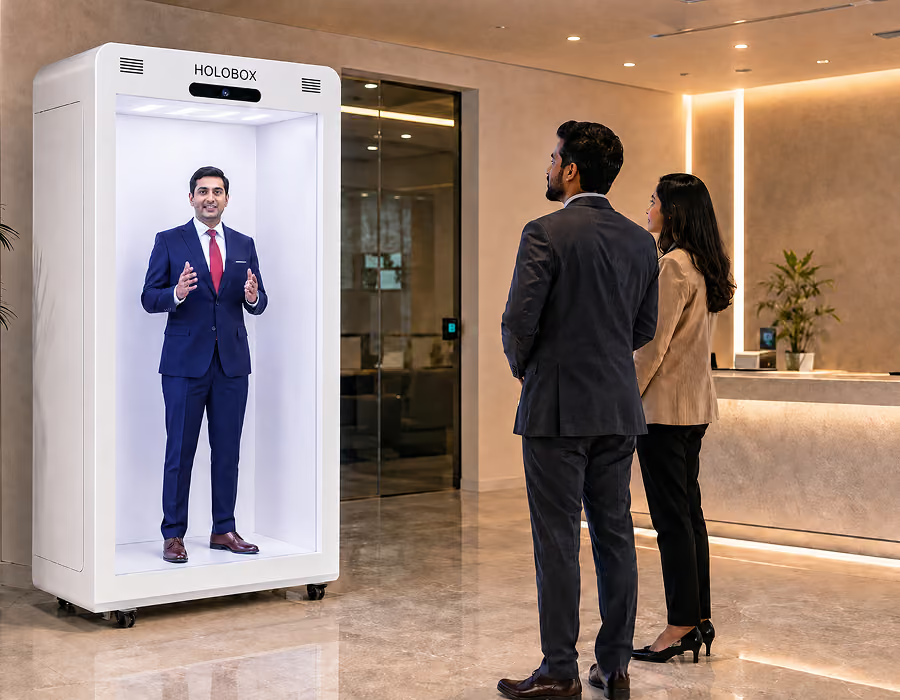
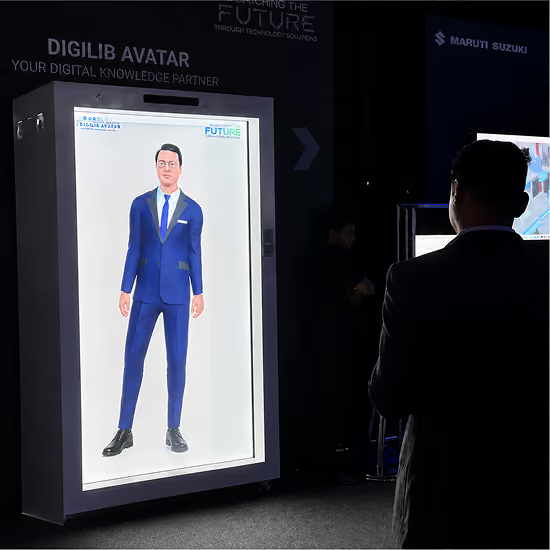
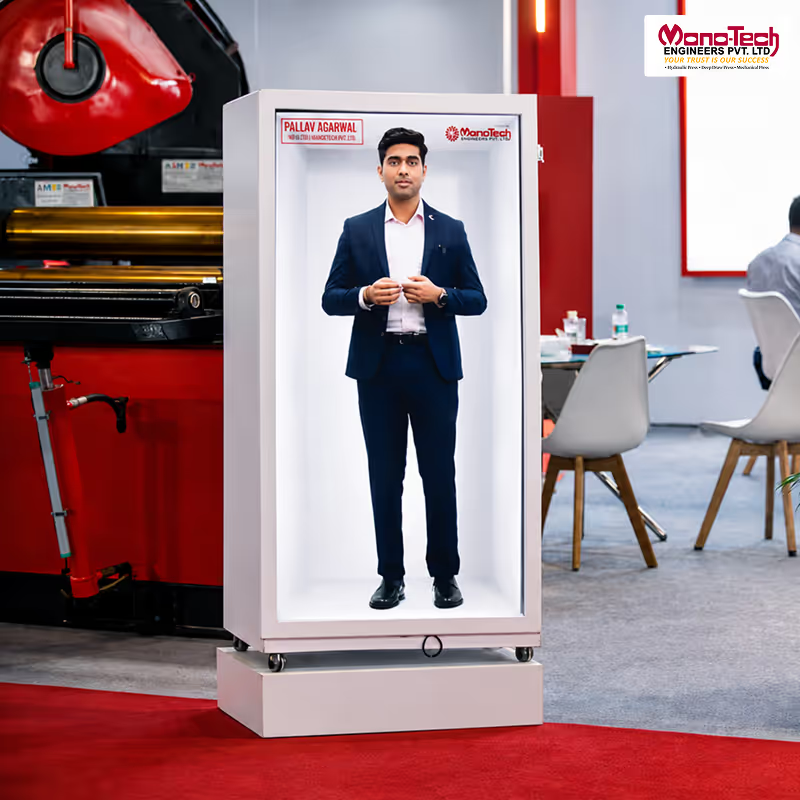
Plan for a half-day, not a project. The unit ships flight-cased and on-site setup runs 2–4 hours: uncrate, position, power up, connect the network, load content, then colour-check the panel against the room's own lighting. A morning install supports an afternoon cohort. Nothing is bolted into the building, so the room stays a room.
Very little. A power socket, a network connection and clear floor space. That is why the display is often called plug-and-play — though the two timings are worth keeping apart when you plan the day, because running in minutes describes the unit once it is standing and cabled, not the whole install. Buying rather than renting adds lead time in front of that half-day, and the install itself does not change wherever the unit lands.
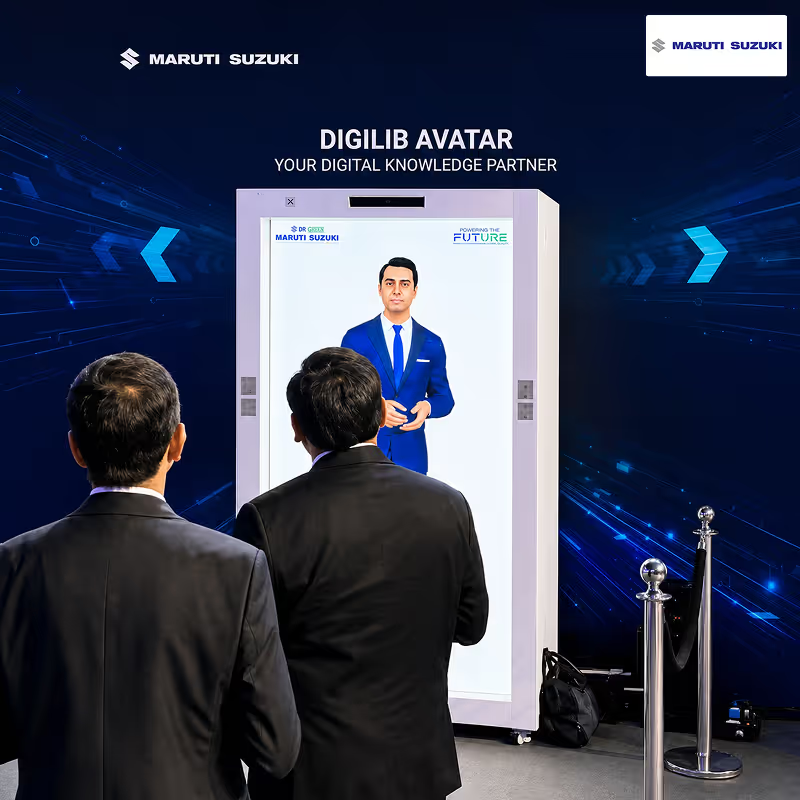
Eight jobs, one device. Talent attraction, onboarding, learning and development, recorded product training, leadership messaging, employee engagement, customer education and innovation labs are all served by the same display, because what changes between them is the file playing on it rather than the hardware underneath.

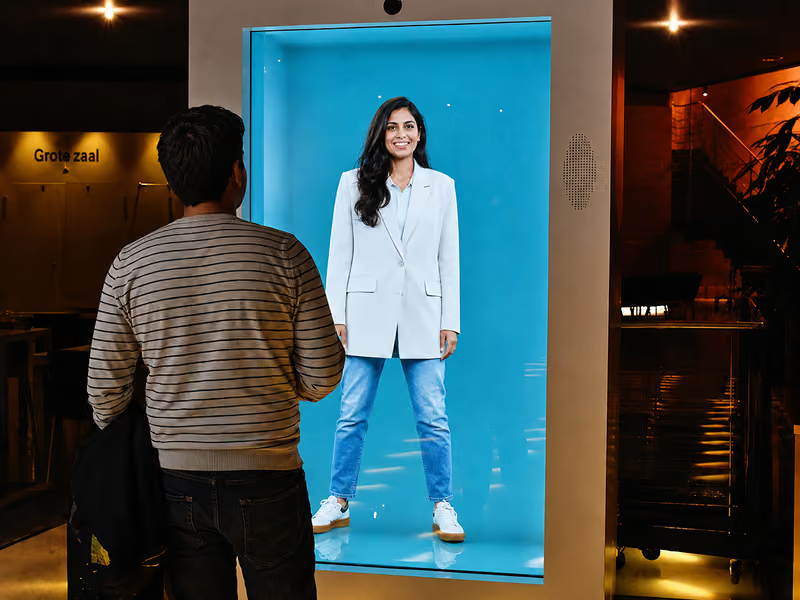
A life-size presence at campus drives and career fairs stops students who would walk straight past a banner, and it runs your employer-brand film without anyone manning the stall.

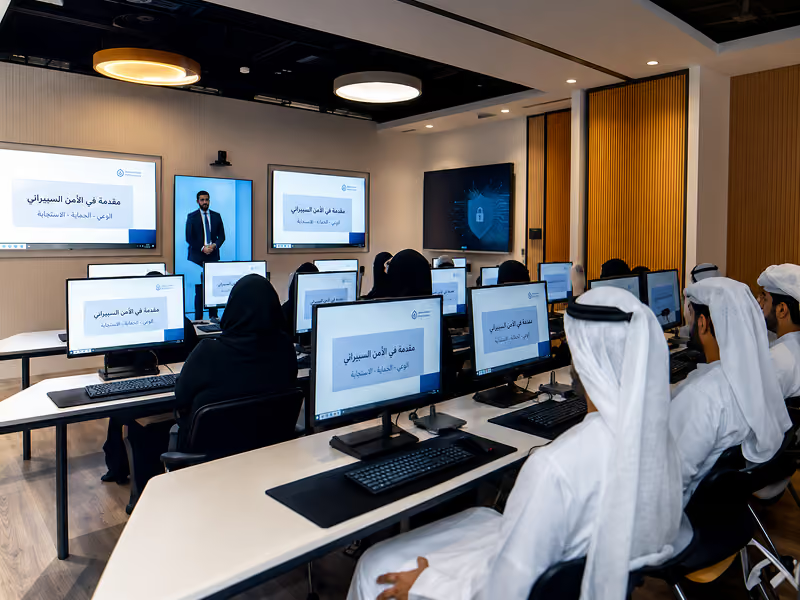
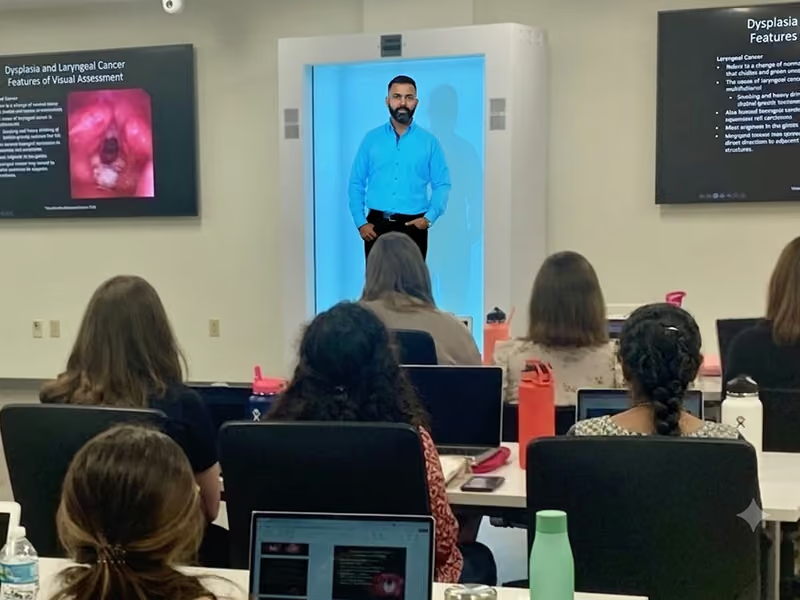
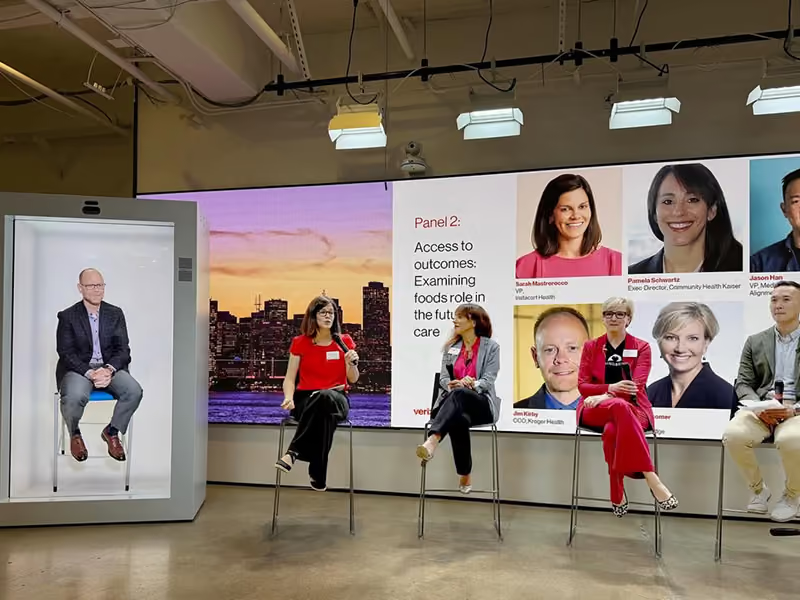
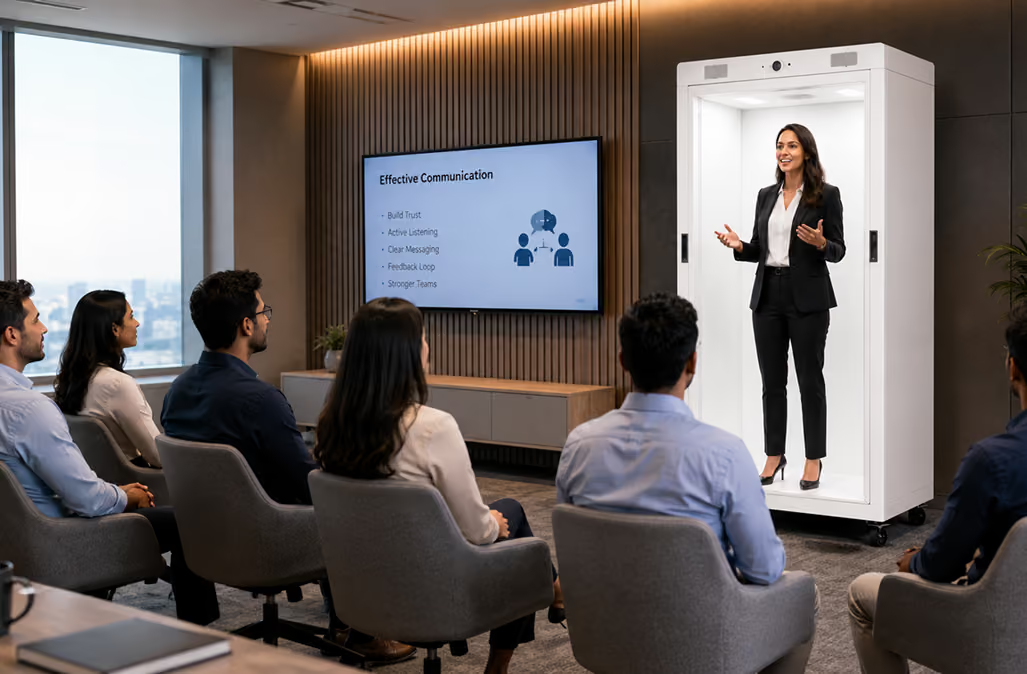
One trainer presents from a studio while several plants watch a full-height figure, so the training calendar stops depending on the flight schedule.

An avatar trained on your organisation runs the joining-day session, so intake week no longer means the same induction delivered again by a person.

An internal expert is recorded once and replayed for every cohort that follows, at the same quality, without that person being booked a second time.

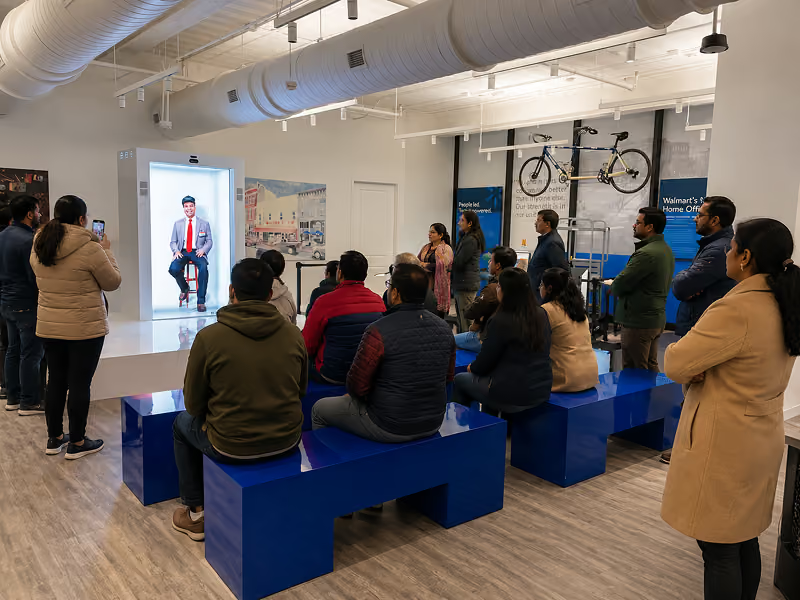
A founder or CXO address plays at human scale in each office, so the message reaching a plant is the message that left head office.

Interactive formats for assessments and town halls give a room something to do rather than something to sit through.

Ideathons, dealer briefings and customer sessions run on the same unit, which is how a training purchase starts earning outside the training budget.

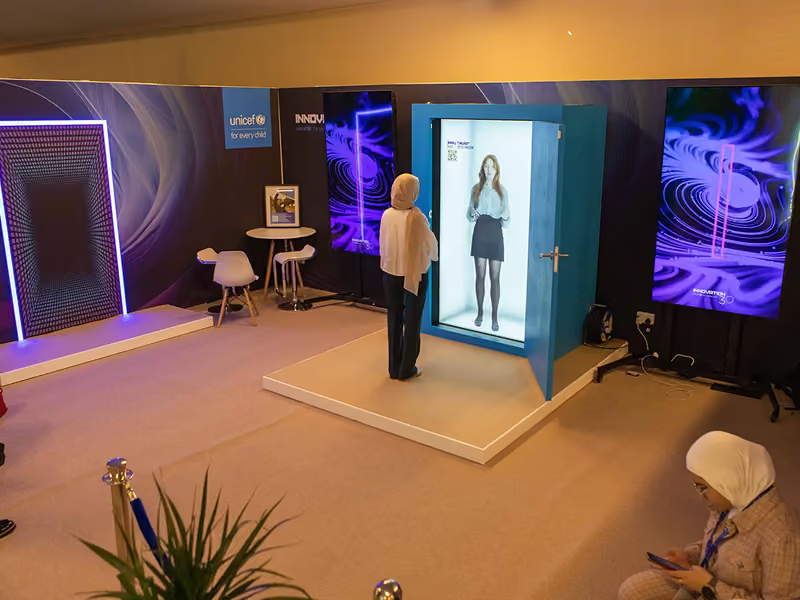
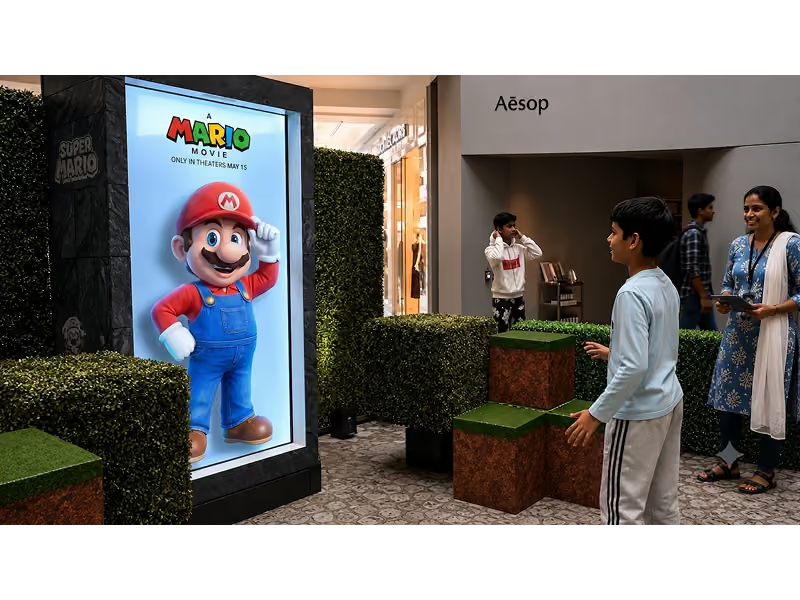
Placed in an experience centre, the display is both the exhibit and the medium — visible evidence of where the organisation is putting its money.
Cost splits two ways, and the split decides more than any single figure. Buying puts the unit on your own floor: delivery in 2–4 weeks anywhere in India, GST invoice provided, and the cost then spread across every cohort you run for years. Renting buys one activation, priced per event, with the hardware leaving again afterwards.
Which is cheaper depends on frequency, not on a price list. A team running quarterly inductions across three plants is weighing one purchase against twelve trainer trips a year. A team running one annual leadership summit is not. The calculator on this page models that directly — travel, instructor and venue cost set against training consistency — and returns a year-one saving and a payback period from your own numbers.
On returns, the honest position is conditional rather than promised: organisations may achieve a return on investment within the first year, depending on deployment and training needs. Ask for a quote built on your cohort count, your sites and your dates. A generic figure would answer a question nobody actually has.
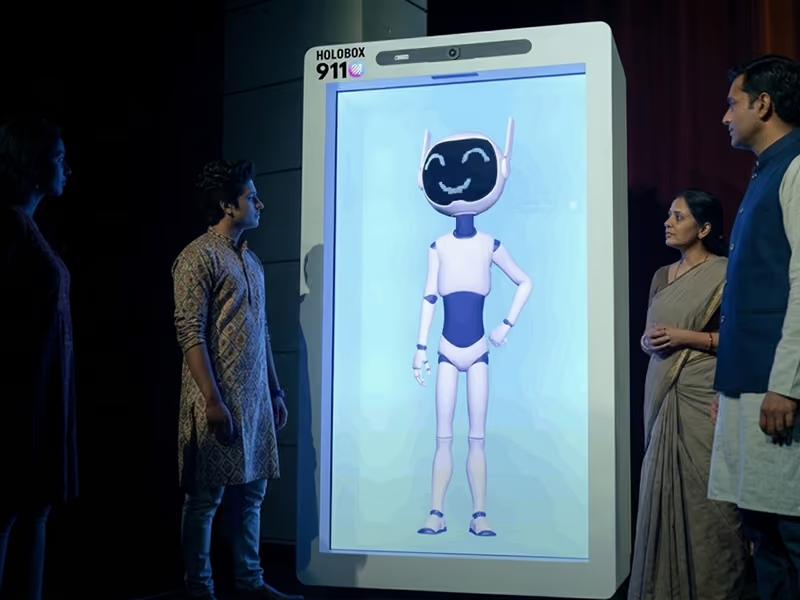
Three modes, one device, and the choice between them is really a choice about who has to be available. Live puts a real person in several rooms at once. AI-led removes the need for anyone to be available at all. Recorded fixes the session so it never varies. Most L&D calendars end up using all three within a year.
Five named deployments answer this, and they are L&D and leadership work rather than marketing. Each is an organisation with a published record, which is the standard applied here. Where the source material dates one event inconsistently, this page names the event without a year rather than pick one, and a sixth deployment carried elsewhere on the site is left out because no published record supports it.

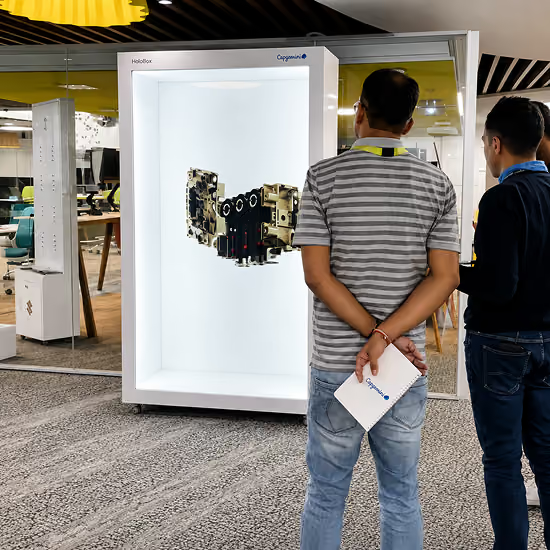
At MQFC, an interactive touch-screen unit went in for the dealer network, letting dealers explore vehicle internal mechanics and parts in naked-eye 3D.

Capgemini runs an interactive virtual AI receptionist in its main lobby, greeting partners and handling visitor registration.

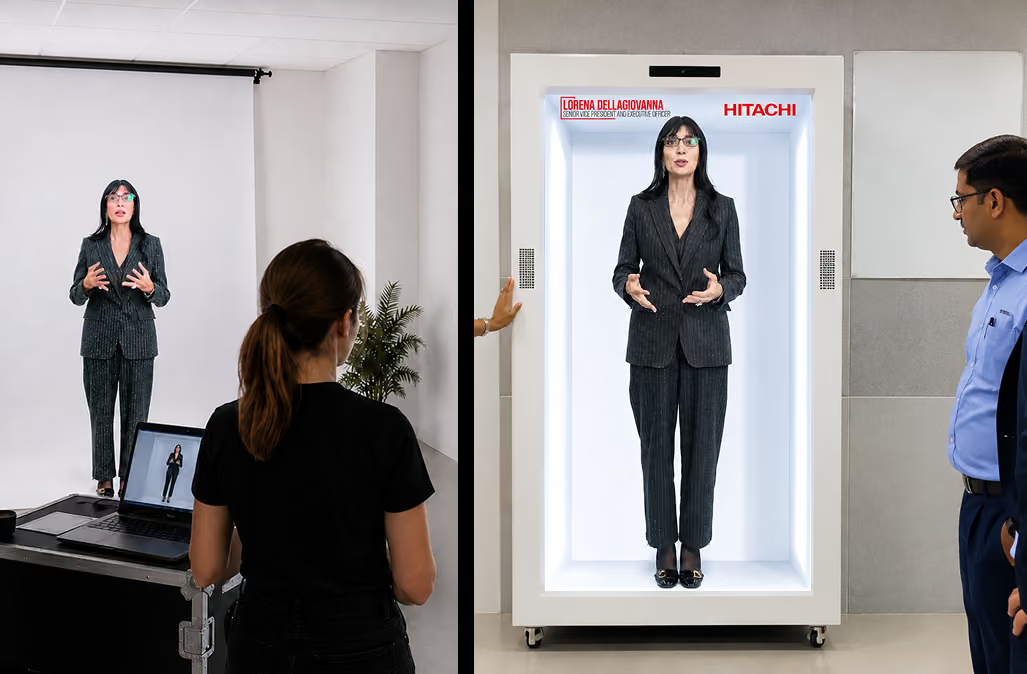
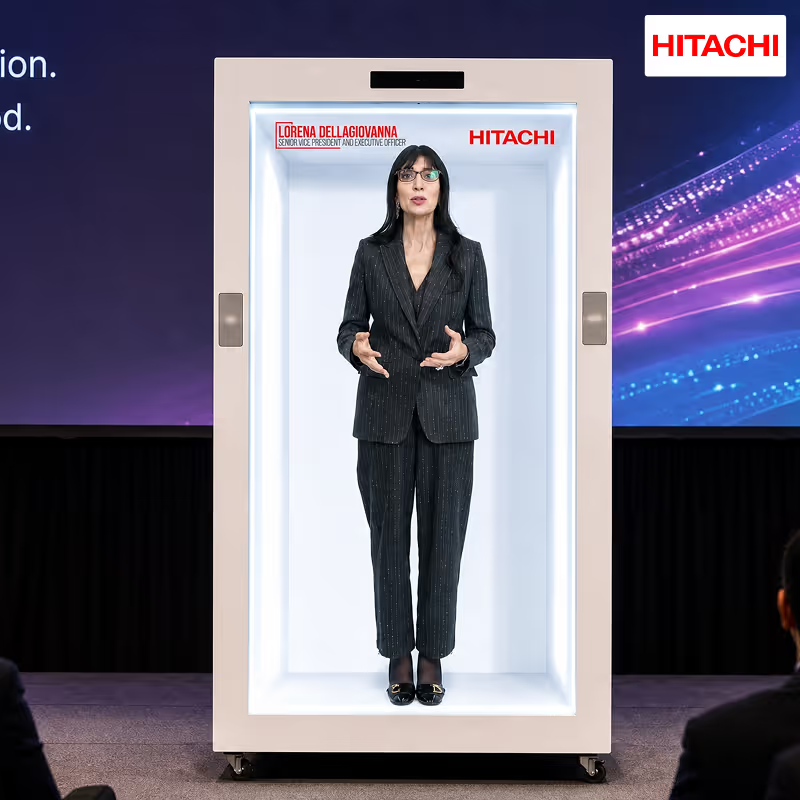
Hitachi beamed its Tokyo leadership team life-size into the Hitachi HR Convention in New Delhi, so delegates met the leadership without the flights.

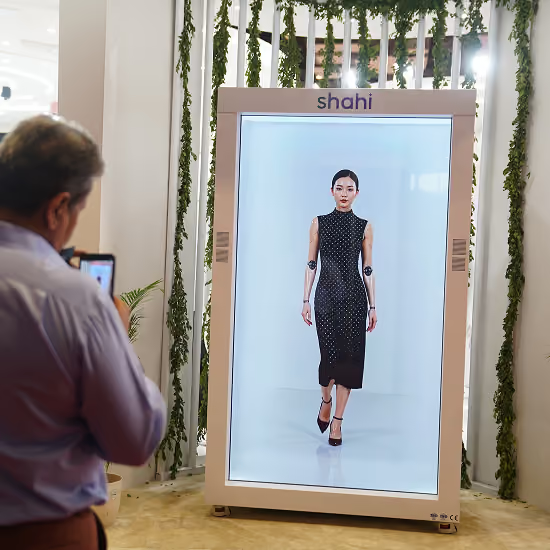
A life-size hologram runway showcased Shahi Exports' latest apparel collection with rotating garments and model walks, creating an immersive fashion experience for visitors at Bharat Tex.

A life-size 3D hologram of Spark Minda's leadership team welcomed learners into the Smart Dojo Room and delivered the L&D transformation vision message.

Monotech installed a CEO welcome at its IMTOS booth: a photorealistic glasses-free hologram message from Mr Pranav Aggarwal to greet every visitor throughout the 4-day show.
A purchased unit carries a 1-year SLA-backed onsite warranty, and onsite installation, content support and ongoing maintenance are included rather than quoted line by line. That combination is what makes this an L&D asset rather than an AV purchase: the team that owns the syllabus is not also the team on the hook for a panel.
The warranty is onsite for a full year from installation, so a fault is attended where the unit stands.
Installation is part of the deployment rather than a separate item added to the quote later.
Turning existing training material into files that read at full height is handled for you, not left with the L&D team.
Ongoing maintenance keeps the display running between cohorts, which is the part that quietly decides whether it gets used.
ISO 27001, ISO 9001, CE and TÜV certification lets procurement and security run their reviews in parallel rather than in sequence.
Content and avatar integration sit with the Noida XR Design Center, and the same route stays open when the syllabus changes a year later.
Less than most teams expect. The panel is an 86-inch true-4K transparent display, available in a 7-foot size, so it occupies roughly the floor area of a doorway. It stands on the floor: nothing is bolted to a wall, dropped from a ceiling or built into the room, which is why a training room remains usable for everything else in the weeks it is not running.
Footprint is rarely the deciding constraint anyway. For a multi-site rollout the practical questions are where the power socket sits, whether the room has a network point, and how much ambient light falls on the panel. All three are easier to solve than finding a permanent home for a fixed installation, and a display that moves between a plant induction room and a head-office atrium earns its space in a way a built-in screen never does.
Video conferencing wins on cost per session and loses on presence. A hologram display inverts both, so the split is practical rather than ideological: use video for the weekly stand-up and the one-to-one, and use a hologram where attention and recall are the point — inductions, leadership addresses, safety briefings, launch training. The audience simply watches — no wearables, no friction — which is what a headset-based alternative cannot match at cohort scale.
| What you are comparing | Video conferencing | Hologram display |
|---|---|---|
| Presence | A face in a grid | A life-size figure at the front of the room |
| Audience kit | Laptop or room screen | None — glasses-free, no headsets |
| Live reach | Any number of endpoints | Wherever units stand; one trainer covers several sites in a morning |
| Setup | Already installed | 2–4 hours on site per unit |
| Best for | Routine, high-frequency sessions | Induction, leadership, launch and safety training |
| Cost shape | Per-seat licence | One purchase, or one rental per activation |
The comparison that actually settles it is not video against hologram but travel against either. One trainer delivering live into three plants on the same morning takes three flights and three hotel nights out of the quarter, whichever technology carries the session.
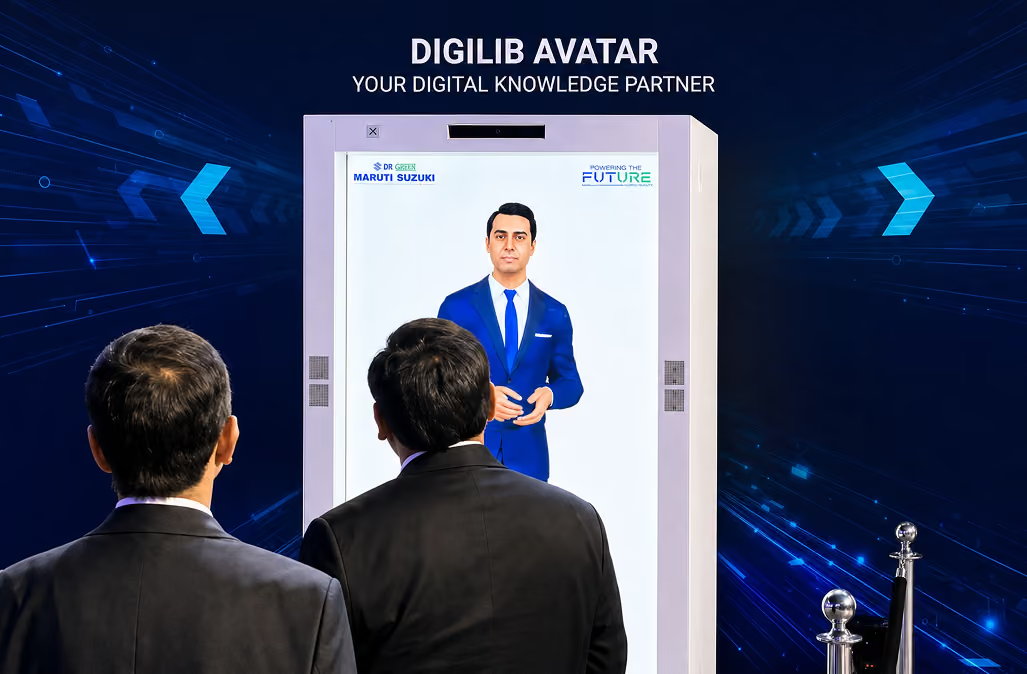
Yes, and that is the specific job it was built for. A human-like avatar trained on your company greets each new hire, answers their questions, and delivers the founder's message at full height — the same way for the ninetieth joiner as for the first. It saves your HR team hours per hire that currently go into repeating one induction.
What it is not is a chatbot on a stand. Trained on your products, processes and culture, it answers a question about leave policy or a plant safety rule in your organisation's own terms. HR still designs the induction and still meets the cohort. What disappears is the session repeated every intake week, and escalation to a person stays one step away for anything the avatar has not been trained on.
There is no single list price, because the cost turns on whether the unit is bought or rented and how often it runs. A purchase is a capital item: delivery in 2–4 weeks anywhere in India, GST invoice provided, and the cost then spread across every cohort for the working life of the unit. A rental is priced per activation and suits a one-off leadership summit or a single campus season. Rental coverage names Delhi NCR, Mumbai, Bengaluru, Pune and most major cities. The useful number comes from a quote built on your own cohort count, sites and dates rather than from a published figure that fits nobody.
Yes. Deployments are offered either as a permanent installation or as an event and town-hall rental, and a single training day falls squarely into the second. Rental coverage names Delhi NCR, Mumbai, Bengaluru, Pune and most major cities, so an induction day in Gurugram, a dealer conference in Pune or a leadership town hall in Bengaluru can each be served without buying a unit. The rental is turnkey rather than a hardware drop: the unit arrives, is calibrated, runs with an operator present and leaves again. Many teams start this way, then move to a purchase once the calendar shows the display would run several times a year.
Yes on both counts. Trained on your products, processes and culture, the avatar answers an induction question about leave policy, a plant safety rule or a product line in your organisation's own terms rather than from a generic script. On language, English and Hindi are standard and regional languages are configurable, which matters most for multi-plant manufacturers where a shop-floor induction and a head-office induction are not run in the same language. Training the avatar is a scoped piece of work at the start of a deployment rather than something the HR team maintains week to week, and it is revisited when policies or products change.
No. The display is glasses-free. The audience simply watches — no wearables, no friction. Nobody hands out headsets at the door, nobody sanitises them afterwards, and nobody in the room is cut off from the people sitting beside them, which is the practical failure of headset-based training at cohort scale. A new joiner walking into an induction sees a life-size figure the moment they enter, with no device to put on and no instruction to follow first. It also removes a real logistics cost from any multi-site rollout, because there is no per-head hardware to buy, ship, charge, clean or replace.
Content plays from MP4, MOV or AVI files on a black background, and that is effectively the only hard constraint on what an L&D team can put up. Most existing training material needs converting rather than replacing: a recorded trainer, a product walkthrough or a founder's address is reshot or re-edited so the subject reads correctly at full height against black. That conversion sits with the Noida XR Design Center rather than falling to the internal team. It is the step worth budgeting time for, because a file that looks right on a laptop does not automatically look right at seven feet.
Yes, and campus hiring is among the clearest uses. Take the unit to campus drives and career fairs and it does what a banner cannot: a life-size presence that stops students walking past, running the same employer-brand film they will see again at induction three months later. Leadership messaging works on the same principle. Deliver founder and CXO messages as a life-size hologram, and every office receives the identical address rather than a broadcast that thins out down the chain. The point is that one device already justified by training also carries the hiring season and the town-hall calendar without a second purchase.
Yes. The hardware is ISO 27001, ISO 9001, CE and TÜV certified, which is normally what a facilities or IT team asks for before a powered unit is signed off for a corporate training centre or a plant learning room. Delivery and support run pan-India, with a Noida Experience Center where the display can be seen running before any commitment is made. Certification documents are supplied alongside the quote rather than after the order, so procurement and information-security reviews can run in parallel instead of one after the other.
Last updated: 31 July 2026 · Reviewed every 60 days.